A common question I often get asked by students is: “What is the right distance for the limbs in downward facing dog”? They seem to be unsure about the correct distance between the palms and the feet in Adho Mukha Śvānāsana.
Light on Yoga (LOY) (see Plates 75 & 76) doesn’t give exact guidance on this matter. However, the instructions given for entering the pose resemble those of entering Chgaturanga Dandasana (see Plate 67 in LOY). This gives us the clue that the correct distance for Adho Mukha Śvānāsana should resemble that of Chgaturanga Dandasana. Therefore, to come up with the correct distance, one should lie down on the floor, place his or her palms by the side of the chest and go up to Adho Mukha Śvānāsana (Downward facing dog pose) without moving the feet or the hands. However, most beginners would not enter the pose this way and rather start from a standing position. Also, as the following point explains, there is more than one correct way to do the pose.
What Is the Purpose of Doing AdhoMukhaSvanasana?
In practicing asanas, one should always bear in mind the purpose of doing any given pose or a sequence of poses. While a definite answer for the above question can be of help for beginners, mature practitioners should know that one can do any given pose in many different and correct ways, depending on what one aspires to achieve in performing the pose. In practicing Adho Mukha Śvānāsana or Downward Facing Dog you should consider questions such as:
Are you doing the pose for mobility or for grounding and stability purposes?
Are you practicing it as a first pose in a sequence in order to warm up your body?
What are the following poses you intend to practice and which ones preceded it?
Are you doing the pose to activate the body and mind or to relax them?
How to experiment with different distances in Adho Mukha Svānāsana
Trying a short span
Enter the pose with an intentionally short span between your feet and palms. Note how much you can extend your trunk and make your spine concave. Step back to Uttanasana.
Trying a long span
Enter the pose a second time, now with an intentionally excessive span between the palms and feet. Note how the excessive span limits your ability to shift weight to the legs. Step forward to Uttanasana
Trying a balanced span
Enter the pose for the third time. Now adjust the distance such that the weight is distributed evenly between the legs and the arms. Make sure you are able to activate and stretch the legs without compromising the spine’s extension.
As demonstrated in the above short experiment, there are several options and one should select the appropriate one, depending on the effects one wants to achieve. When I do the pose before backbends, I often increase the distance to allow more space in the shoulder girdle and to help concave the spine. This prepares for the actions of the arms and shoulder blades required in backbends. However, when I do the pose before standing poses or forward extensions, I often shorten the distance in order to be able to ‘stamp’ the heels better onto the floor, to intensify the stretch of the hamstrings and the calf muscles, and to open the skin at the backs of the thighs.
To sum up, although I didn’t specify any definite distance, I hope I did shed some light about how one should adapt the distance of the limbs in Downward Facing Dog according to the purpose and the circumstances of one’s practice.
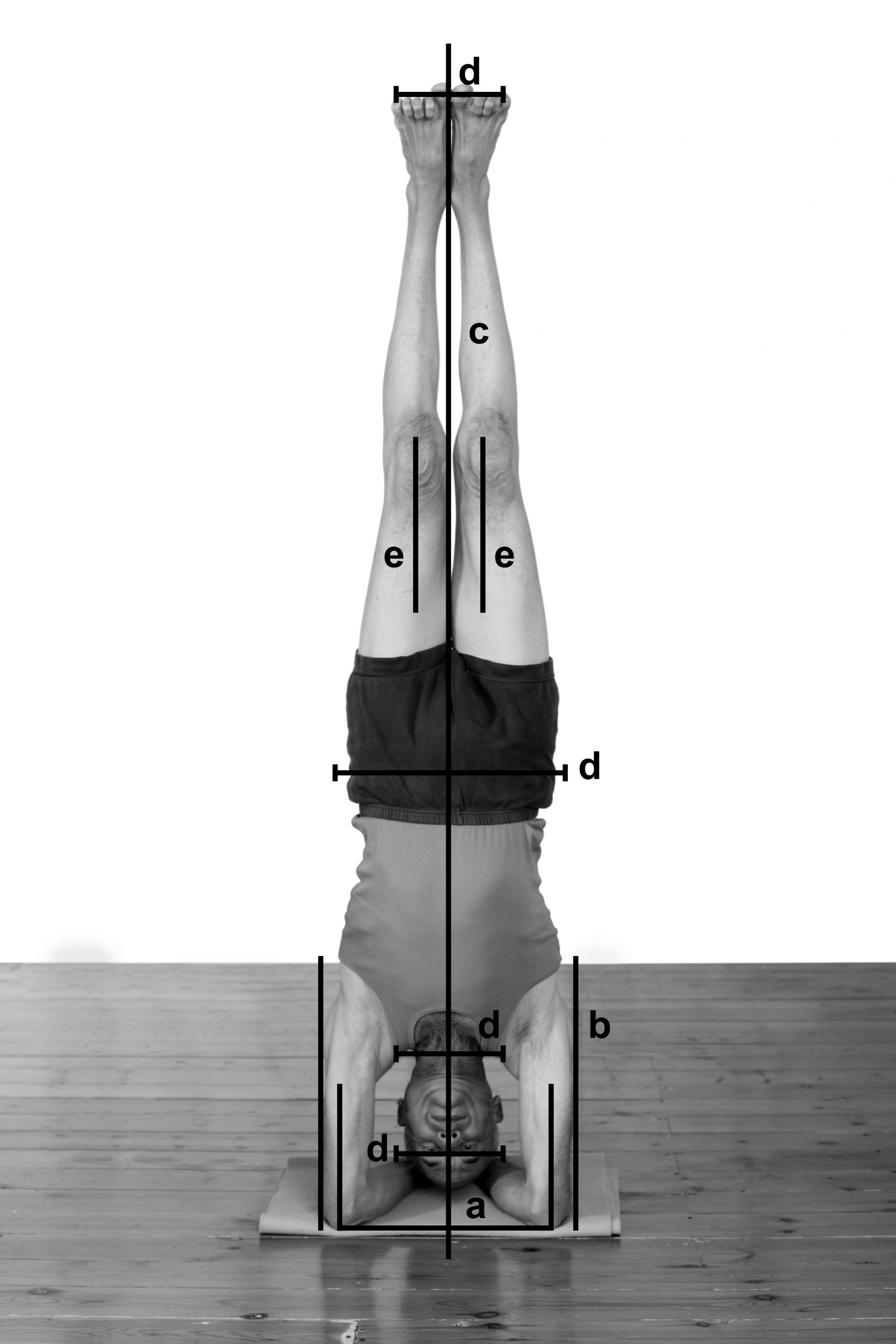
In Śīrṣāsana (Headstand) one doesn’t see much of one’s body, only the elbows can be seen. Many of us have asymmetries in the arms, shoulders, and upper back, and this may cause our Śīrṣāsana to be misaligned. Sometimes the legs are tilting to the left or right, and sometimes the pelvis and legs are turned to the left or to the right. Usually, practitioners wouldn’t know whether their pose is skewed and even if the teacher points it out, they still tend to keep doing the pose wrong since it feels right to them. They think that their body is correctly aligned because they are so used to doing the pose incorrectly. Only by repeated practice of a straight and aligned Śīrṣāsana, can one overcome such a wrong and sometimes deeply rooted habit.
How does then one measure his or her pose in the setting of a home practice?
As B.K.S. Iyengar points out in Light on Yoga, one can check his or her alignment by doing the pose in front of a mirror. Here I show a different method, which may be more accessible to most practitioners who don’t have a large enough mirror extending all the way down to the floor. A wall corner is found in every house and can be used very effectively to correct the misalignments mentioned above.
How to check your headstand is aligned using a wall corner?
Placing the hands on the corner
Instead of interlocking your fingers, press your palms against the walls on both sides of the corner.
Going up to the pose
Place your elbows shoulder-width apart on either side and go up to the pose.
Using the corner
Position the middle of your occiput (the back of the skull), your tailbone, and the meeting point of your heels against the corner.
Aligning with the corner
Keeping the back of your head and your heels on the vertical edge move your tailbone and your thoracic dorsal spine away from the corner. At the same time, move your lumbar spine towards the corner.
Testing the alignment
After a while, move slightly away from the corner; stay from 30 to 60 seconds without touching the corner. Then slowly move back to touch the corner with your heels and tailbone. Check if both heels touch it concurrently and symmetrically. Observe how your buttocks are positioned relative to the corner.
Internalizing the alignment
Experiment several times and see if you have a consistent tendency to tilt the body or to become crooked. Observe and then correct. Repeat this practice, until you learn the correct alignment, such that when moving to touch the corner your heels and buttocks are placed symmetrically on either side of the corner.
Tips:
Sharpen and elongate your spine by bringing its left side to the right and its right side to the left.
Still another way to align yourself is to do the pose facing a vertical column, a wall or a window edge. Observing such a vertical line can help you check the verticality of the pose.
After examining the mind-body connection within the frame of yoga practice in our book The Psychophysical Lab, Ohad Nachtomy and myself are broadening our view to explore the connection between our practice and the setting in which it takes place. In our forthcoming book: Yoga in Nature and Natural Props for Yoga we discuss practicing outdoors in a natural environment. We point out the benefits of practicing in natural settings and present techniques for such a practice. Being Iyengar Yoga practitioners, we explore methods to use sand, rocks, trees, and other natural elements as props for the practice. The new book presents an in depth look at how to use these natural elements as props for yoga outdoors and includes many color photos illustrating the techniques discussed. In this article I only give a general discussion of this subject.
Special thanks to Allison Aitken for her useful comments and suggestions.
Practicing in Nature
I love to practice outdoors in the open air, on the seashore, or during a hike in the mountains. Fortunately, I live close to the Mediterranean shore, and most of the year I practice regularly on the beach, enjoying the Elements of nature: the water, the air, and the sun.
Virabhadrasana II with feet anchored in the sand
Over the years, I’ve discovered that practicing yoga outdoors is a powerful way of recharging my body, mind, and spirit, and retaining balance and poise, even when facing the inevitable vicissitudes and downfalls of life. I’ve experienced the joy of being alone in nature, absorbed in a deep forward extension or in headstand, observing the waves from surface level – or, meditating near the sea, feeling the soft breeze on my skin, and listening to the rhymical, meditative roar of the ocean. Or, when practicing in the desert, sensing the touch of cool curved rock against my body as I let my back arch on top of it.
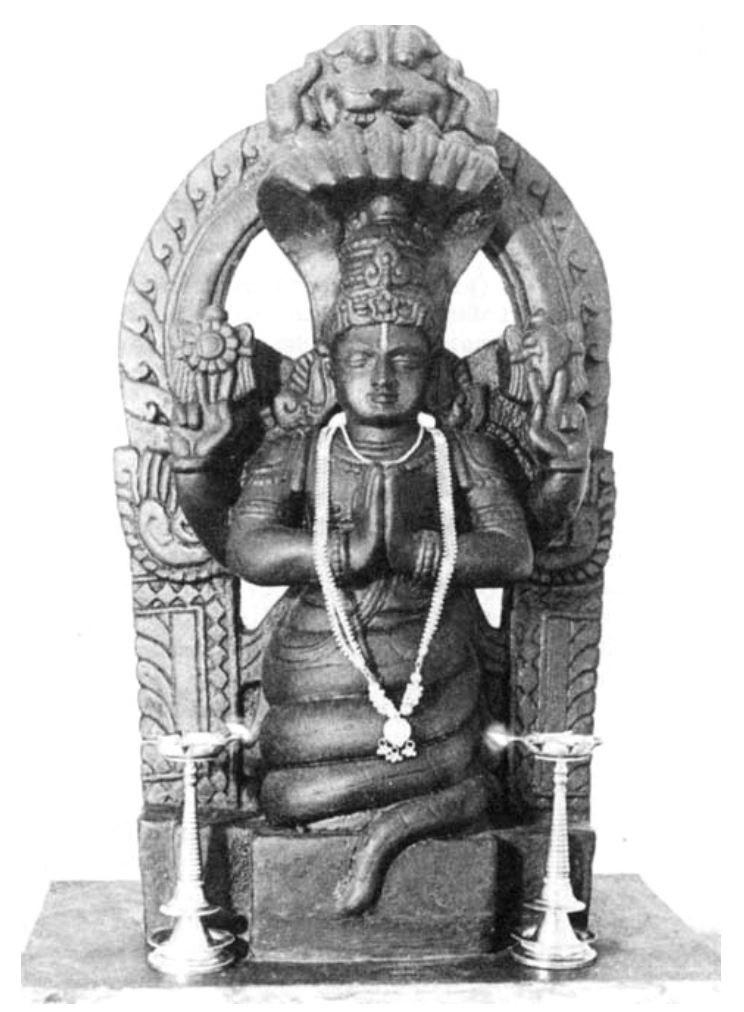
Practicing in natural surroundings has taught me about yoga more than the safe environment of my studio. In nature, my body spontaneously opens up, my mind becomes calm and focused, and my practice flows naturally and effortlessly. I can stay in challenging āsanas with less effort and more focus and concentration than when doing them at home. Somehow, and somewhat mysteriously, my body and mind react spontaneously to the rhythm of the waves and the wind, to the abundance of energy that nature seems to offer. Sometimes advanced āsanas that I struggle with at home come easily in nature. I often experience the state Patanjali defines as prayatna śaitilya – a sensation of effortless effort in performing an āsana, which, according to Patanjali, is the characteristic of a mature and well-done āsana (see Yoga Sutras II.47). It is not entirely clear to me why these natural elements are so conducive to my practice. Yet the effect is clearly felt – I am able to concentrate and connect with myself and enjoy the practice in a way that does not often happen in the studio.
Nature Provides Useful Props
Iyengar Yoga practitioners (like me) might worry that proper practice requires a flat floor, walls, and most importantly, props. No doubt, these all have great benefits in practice. In fact, I use props regularly and teach and write books about their use in our practice. But practicing yoga outdoors in nature need not deprive us of the benefits of props, because, as I will show in the forthcoming book (Yoga in Nature), nature itself provides very effective props. And so, we do not need to give up on the benefits of props when we practice in nature. One of the joys of practicing in nature is the search for natural props. Wherever you are, you can find wonderful props. You only need to look for them with an attentive and imaginative mind.
Over many years of practicing in nature, I have devised many methods for using the sand (at the beach), the rocks (in the mountains), and the trees (in the forest) as props that enhance and deepen the practice. I find these natural props extremely effective, often more so than the artificial ones we use at the studio. The sand especially lends itself easily to creating slopes, little pits, and the like, which give soft and natural support for many āsanas that prove even better than the human-made apparatus we commonly use at the studio (more about this in the forthcoming book). It is my sincere hope that this article, and the book that will follow, will help you combine the benefits of being in nature with those of practicing yoga, without giving up on the benefits of yoga props.
Why Practice in Nature?
With all its technological advances, the modern way of life provides us with many advantages and comforts: heating and cooling systems allow us to control air temperature; electricity provides us with light; pumps and pipes bring water to our homes; the Internet provides us with a near-endless supply of information and entertainment; and so on. All this technology saves us a great deal of time and frees us of worries about our basic needs, such as food and shelter. Despite these great benefits, technology also has its costs. We have become isolated from the abundance of nature and its positive effects on our wellbeing. Alienated from a natural environment, we might even become alienated from our own bodies, which are one of magnificent and majestic creations of nature. This detachment from nature is apparent once we look at modern workspaces. Many people in technological countries work indoors in large production halls. I used to work in such an ‘open space’ when I was a software engineer at Intel. I always felt it is somewhat ironic to call these offices ‘open spaces’, when they have no windows through which I could see the sky or breathe fresh air. These working conditions took a heavy toll on me; sitting all day, I felt my chest collapsing and tension accumulating in my upper back and neck. I never had enough time for my yoga practice. Working on a computer for long hours can, in the long run, even create scoliosis because of using just one hand for the mouse. So, after less than two years, I left Intel and switched to a more relaxed way of life.
The importance of maintaining a close connection with our natural environment is stressed by Georg Feuerstein, in his book The Deeper Dimension of Yoga:
“Living in cities seduces people into having a merely abstract relationship to the Earth. It is important to touch the soil, tend flowers or trees, taste clean spring water, see the exuberance of wildlife, and so forth. Inwardness without such grounding is often little more than neurotic escape. Wholeness requires the transformative touch of the Earth as well as blessing from the ‘heaven within’”.
Immersion in Nature
Being in nature, in front of the ocean, in the high mountains, or when watching the night stars, one naturally feels small and loses some of one’s self-importance. Nature is so vast and abundant and, when you are open to it, you become more modest and humbler. This is a good mental state for commencing a session of yoga practice.
However, to be immersed in nature, one needs to quiet one’s mind. Being outdoors is not always enough to acquire a stable and serene mind. If you go out on a noisy picnic, you may not even feel the effect of nature. The noise will probably mask the chirping of the birds or the roar of the sea. Engaging in practice quietens the mind and opens the doors of perception, and so it is an ideal way for emerging and reconnecting with nature. When you start practicing (in any environment), you need to temporarily cast aside all your projects, tasks, plans, worries, and regrets, and connect to your body and your breathing. Being immersed in nature helps to shift the mind’s focus from its daily habits and to turn it inwards to find poise within.
The practice of yoga stills the fluctuations and the automatic reactions of the mind (citta vṛtti nirodhaḥ). Going out into nature is a step in this direction. Many people feel that going into the woods or to the mountains helps in quietening the mind, making it serene and receptive. And when the mind is quiet, practice flows more easily (sukha).
This habituation into urban life is also true of the way we practice yoga today. Most of us are so used to practicing at an equipped studio, that we forget that this is not how the first yogis did it. The tradition of yoga is deeply connected with a social movement of abandoning the inhabited cities and migrating to the jungles of India in search of spiritual upliftment, which these yogis and ascetics deemed possible only when one abandons the comforts and pleasures of ordinary life.
Nature in the Tradition of Yoga
In various traditional meditation and yoga manuals, there is often some discussion of the benefits of practicing yoga outdoors in solitude, in a cave, in a forest, at the foot of a tree or on a mountain. For instance, Svātmārāma’s Haṭhayogapradīpikā – a medieval authoritative text that defines the practice of Hatha Yoga – emphasizes the importance of solitude in the first chapter, verse 12, although Svātmārāma does not elaborate on the proper environment for practicing. Later yogis go into more detail. For example, Swami Śivananada from Rishikesh, emphasizes the value of nature as a source for healing and discusses the pros and cons of different solitary places such as caves in the Himalayas, where yogis can seclude themselves from society and devote themselves to spiritual life.
Some Buddhist texts go into greater detail about the natural environment of solitary practice. For instance, the Indian Buddhist Śāntideva’s A Guide to the Bodhisattva’s Way of Life (Bodhicaryāvatāra) celebrates the advantages of being in nature: “Fortunate are those on delightful rock terraces, broad as palaces, cool as sandal and moonbeam; their minds are fanned by noiseless, delightful forest winds” (Chapter 8, verse 85).
In the Tibetan Buddhist tradition, Longchenpa’s Finding Rest in Meditation: The Trilogy of Rest, Volume 2 (Bsam gtan ngal gso) is a great example of a text that explains how different kinds of natural environments impact the mind and support different kinds of meditation practice:
“..lightly built structures high in the mountains, which are cool and airy and command a vast and open view, are best suited to the cultivation of vipaśyanā, whereas quiet, low-lying, forested areas or enclosed valleys are propitious for the inward orientation of calm abiding”
(See: The First Vajra Point: Concerning the Place of Practice, pp. 5-9 in the English translation).
In western culture, too, the voices that advocate living according to nature and that warn us about the gap between civilization and human nature are important and influential. One can think of the huge influence of Rousseau, for instance. In our modern, industrial era, some movements go against the urban tendency in our culture to turn away from nature. Ecopsychology, for example, is an interdisciplinary field focusing on the synthesis of ecology and psychology and the promotion of sustainability. Another pertinent example is Ecotherapy, a therapeutic discipline based on ecopsychology, and on the idea that human beings are part of the web of life and that our psyches are not isolated or separate from our environment (see for example Chalquist, C. (2009). A look at the ecotherapy research evidence. Ecopsychology, 1(2), 64-74).
Modern yogis have also observed that practicing yoga in nature adds another dimension to the practice and has positive effects on our health and wellbeing. Oschman et el. studied the effects of grounding on inflammation recovery and immune responses and found that
“Grounding reduces pain and alters the numbers of circulating neutrophils and lymphocytes, and also affects various circulating chemical factors related to inflammation”.
There is much we can do today to reconnect with nature in the present: We can get in touch with our own body, thereby getting in touch with our own nature. We can be more attuned to nature, recalling that it is the ultimate source of all energy and life. We can humbly realize that we are the children of Mother Earth. The conviction we develop throughout this book is that practicing yoga outdoors is an effective way to gain and develop such insights!
Where and When to Practice?
No doubt, nature can sometimes be a tough environment for practice: it does not always provide a comfortable space, and we may be bothered by heat, cold, or insects. That is why we must carefully choose the right place and time for our practice. Here are some suggestions on how to make that choice.
First, we do not recommend that you always practice yoga outdoors. Some natural environments are not suitable for yoga practice. Moreover, sometimes we need the walls, floor, air-conditioning, and other comforts of being indoors.
The ideal times for practice are when the sun is rising or setting – that is, in most cases, early in the morning or at dusk. At these times, the air is cool and there is a special ambiance of transition from night to day or vice versa, and the sun, close to the horizon, emits soft light at a low angle.
There is no need for any special yoga outfit or props. Loose and comfortable trousers and shirts are good enough, and the only prop that we advise carrying with you is a yoga belt. Also, it is not always necessary to take off your shoes for practicing; you can practice most āsanas while wearing your shoes. Of course, if the terrain is smooth enough (as it is on the beach) it is recommended to practice barefoot to have better contact with the earth.
An Introductory Practice
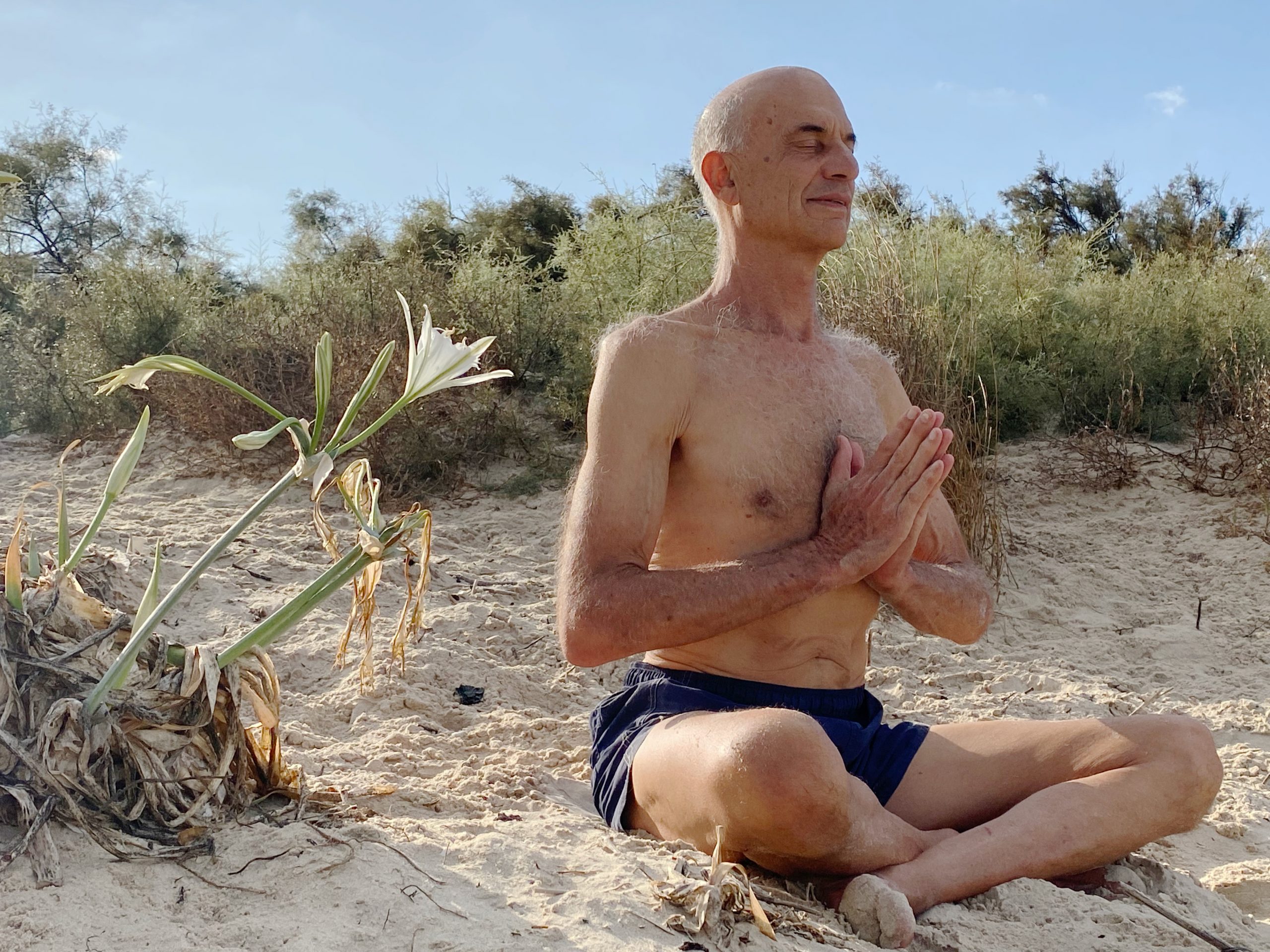
Go outside to a quiet place in nature. Sit in a stable and comfortable position. Keep your body upright, alert, and relaxed. You may close your eyes. Relax your eardrums and make your ears receptive. Relax your jaw and tongue and be aware of the inner space of your mouth cavity and your throat. While drawing your eyeballs into the space of your skull, turn your attention inwards and become aware of the space of the inner cavities of your body: the inner spaces of the pelvis, abdomen, chest, neck, and skull. Allow your exhalations to penetrate and diffuse through these spaces. Be aware of the sensations of the breath in your body. Connect with the vast inner space.
Now become aware of the sounds that strike your ears. Sense the infinite space in front of you and the infinite space behind you; the infinite space on your left and the infinite space on your right; the infinite space below and the infinite space above. Immerse yourself in that space. Connect with the feeling of the vast external space. Being simultaneously aware of the external and the internal spaces, you can gradually feel how the border between these (supposed) two spaces fades away and become aware of the unity of the inner and outer, and that you are one with that infinity.
Self-Practice is a very important component of our yogic path (read here and here about how to structure self-practice). However, to persist in self-practice over time is not an easy task – it requires self-discipline and perseverance, but also continued inspiration. Even if yoga practice is an integral part of our life, our daily routine, at times, we find ourselves going through the motions just to get through the practice in order to free ourselves from the other activities of the day. Often, during my morning practice, I find myself brooding over all the tasks I need to complete that day, and I become increasingly agitated and restless. This shouldn’t happen! I know that the practice is the best part of my day, and I know I should approach it wholeheartedly! Therefore, I have to renew and rekindle my inspiration for yoga practice. In this article, I offer three reflections that I use to do just that. Reflecting daily on these three attitudes strengthens them, and helps me to stay inspired, keeping my motivation to practice unshakeable.
Rekindling you inspiration for yoga practice – Eyal Shifroni
Fostering Santosha – Contentment
The first reflection is on fostering Santosha (santōṣḥ)– contentment. It is such a built-in tendency of ours to focus on negative thoughts and emotions; to notice what is missing, to concentrate on our failures while taking our successes and achievements for granted, ignoring them. It seems that this is our mind’s natural tendency, which was shaped by natural selection to concentrate on the risks and the dangers. However, a mind that is occupied with negative thoughts and emotions isn’t happy and content. Thinking about what went wrong and focusing on the mistakes you’ve made isn’t a good way to be joyful or serene. That is why many spiritual paths recommend developing contentment, and indeed, Santosha is part of the eight-limbed yoga (see Patanjali Yoga Sutra II.32) – the path that Patanjali had taught for purifying the mind (ashuddhi kshaye) and developing spiritual wisdom and discernment (jnana & viveka khyateh). But how does one develop contentment?
The answer to this is to develop appreciation and gratitude.
The tendency for negativity is so ingrained in our mental make-up, that in order to foster positivity and contentment we need to contemplate appreciation and gratitude daily. To rekindle your inspiration for yoga practice – make yourself a habit of devoting a few minutes at the beginning of your practice (or, if you prefer, at the end of each day) to appreciate all the precious gifts that you have in your life. You have many of these if you are reading this article; you are not too busy with survival and can devote time to reading this article, you are not hungry, and are comfortable enough to relax and be able to concentrate, you were lucky enough to get a good education that enables you to read understand and think, you have the inclination, motivation and will to walk down a spiritual path and you have found yoga – a wonderful path for developing your capacities and become a better human being. You have enough material means to afford a computer and an Internet connection. You are most fortunate!
In Sutra I.33, Patanjali mentions the practice of Mudita – sympathetic joy – being happy with the success and good fortune of others. But one can’t be happy with the achievements of others if he or she doesn’t learn to be happy with their own success and good fortune. So, gratitude is part of the practice of Mudita. Recognizing the good brings happiness and a feeling of abundance, and this allows us to be happy when others have abundance (rather than envy them).
Remember that these gifts and blessings should not be taken for granted; most people in our world are not lucky enough to have all of these things. In a previous article about Santosha, I suggested developing Santosha by reflecting on our good fortune using these five categories: our relatively good health (for example, our ability to walk, see, and think), our good relationships with friends and partners, and the love and care we got as we grew up, the fact that our basic needs: food, shelter, and clothing are satisfied (and we have so much more than just that), the freedom and security we enjoy, and the path of yoga that infuses our lives with purpose and meaning.
Practice helps the Earth’s Ecosystem
The second contemplation is on the ecology of our planet.
The rapid development of our civilization is placing our ecological system in great peril. The unfolding situation is already very alarming and is likely to worsen in the coming years unless, we, as the human species do something to stop this impending disaster.
It is evident that one basic thing we can do to avert this crisis and hopefully save our planet (or more precisely, save life on this planet – the earth itself is not really affected by our irresponsible behavior) is to control our greed and consume less.
We know from experience, that the more joy and contentment we feel, the less external satisfaction we seek. I think, therefore, that the practice of yoga can contribute to preserving the life of all species, including our own. Practice develops inner resources of contentment, tranquility, and joy. By cultivating these inner resources, you won’t need to consume as much. You will become less dependent on material amusements or on food to fill the void inside. You will not need to flaunt in the latest luxury car or the most recent model of mobile phone to feel worthy. When you learn how to find the joy of being in the moment, you won’t need to go on expensive trips, stay in fancy hotels, or perform extreme sports to get stimulated and excited.
In that respect, yoga helps in renunciation. In fact, Vairagya – renunciation, dispassion, non-attachment, or not clinging (see more about Vairagya) is an important component of yoga (see Patanjali Yoga Sutras I.12 & I.16). These days, more than ever, the world needs more renunciation. It doesn’t have to be complete renunciation, but we must learn to lead a simpler life and consume less.
The last Yama the Patanjali mentions – Aparighara – means living in simplicity and not consuming more than we need. This is a very important medicine for our capitalistic and greedy society.
Yoga can help us to reduce our consumption and our ecological footprint, not only by becoming self-contained. Yoga, in fact, is preventive medicine and a wonderful public health measure that all countries should embrace and adopt. Maintaining the health of the body implies needing fewer medical resources; maintaining the mind balanced implies requiring fewer mental care resources.
So, your simple daily practice has far-reaching effects, not only on your own well-being but also on the well-being of our entire planet Earth.
Your simple daily practice has far-reaching effects, not only on your well-being but also on the well-being of our entire planet Earth
Your Practice is not only for Yourself
Often it seems that asana and meditation are self-centered, secluded practices that lead to isolation, but this is, in fact, a very superficial understanding of these practices. Think about what you are projecting out to the world. Are you projecting well-being, joy, and generosity?
When you are weak or suffer, you are placing a burden on the people around you, as they have to support and care for you. You may also hurt and even harm other people because of the poor things you say or do out of your own weakness, fear, or anger. Moreover, you will not be able to offer assistance to other people, because you will be constantly occupied with your own suffering. When, through practice, you develop mental strength and stability your friends and family members will not have to endure your foul mood, irritability, frustration, or glumness.
When you create more joy and peace in your life, you will of course benefit from it directly, but you are not the only one to do so. Your often isolated practice literally ripples out and affects the people around you. When the people around you see your positivity, serenity, and joy, they will be affected. Your positive example will inspire them to practice themselves, in order to improve their own lives and the inspiration for yoga practice will flow both inwards and outwards.
Krishna’s words in the Bhagavad Gita describe the accomplished yogi thus:
Who is ever content, gifted with yoga, self-restrained, of firm conviction, who has dedicated his mind and reason to Me – that devotee of Mine is dear to Me.
Who gives no trouble to the world, to whom the world causes no trouble, who is free from exultation, resentment, fear and vexation – that man is dear to Me.
Bhagavad Gita, XII.14-15, (from the translation of Mhatma Gandhi)
The Buddhist monk Thich Nath Hanh said:
“A smile can change the situation of the world.”
Indeed, the entire humanity, as well as all other creatures can benefit from your secluded practice. This may sound exaggerated, but you never really know how other people are affected by your behavior, or by things you say and do. Maybe your smile or an action you take with love and compassion will be the source of a meaningful transformation in someone’s life, without you even being aware of it. This change in one person’s life can go on rippling out to affect additional people. This effect has no limits, it is contagious and can spread like a (positive) virus.
So, when you lose your inspiration and your practice becomes dull and mechanic, or when you are confronted with difficulty, think about that: you are not only practicing for yourself; you are practicing for the wellbeing of all humanity. You are offering your practice as a gift to humanity; you sow seeds that can sprout in many unexpected, unforeseen ways.
To Sum Up
Fostering contentment develops happiness; happiness leads to a more peaceful, simpler life, which, in turn, helps to preserve our entire ecosystem. It will also incline you toward more generosity and compassion, which, in turn, will affect our entire society. Contemplating this can infuse your practice with inspiration, which will motivate you to persevere and progress in it.
This is how Guruji Iyengar explains why he introduced props into his practice and teaching:
I was preoccupied trying various ways to improve and perfect my own practice. I used to pick up stones and bricks lying on the roads and used them as ‘supports’ and ‘weight bearers’ to make progress in my mastery of āsana…
Props help to perform the āsana-s with ease… The student understands and learns āsana faster on props as the brain remains passive. Through passive brain one learns to be alert in body and mind. Props are guides to self-learning. They help accurately without mistakes.
70 Glorious years of Yogācharya B.K.S. Iyengar, page 391
Christian Pisano adds to that:
Props thus allow us to unfold the space of an āsana and acquaint us with certain āsana that may otherwise be too difficult to practice. Props create an understanding of the correct gesture (mudra) and attitude (bhava) of āsana. Props let us stay longer in an āsana, thus permitting deeper penetration of unexplored bodily regions.
The Hero’s Contemplation, C. Pisano, p. 109
While props are an important characteristic of Iyengar Yoga, they should not be confused with its essence. Props are a means for achieving an end – such as alignment, stability, precision, and prolonged stays in āsana.
The usage of props covered here is intended to direct awareness to different aspects of the āsana and to different parts of the body, in order to deepen and enhance the understanding of the āsana. At the same time, practitioners should be careful not to develop a dependency on props; rather, props should be employed intelligently in pursuit of a mature and mindful practice of āsana.
Guruji Iyengar continues his description:
Now, talking of the pros and cons of using props, one of the criticisms leveled against props is that one becomes habituated and lacks the will to attempt doing independently. Is this the fault of props? Certainly not! Props are to feel the āsana. But I never say that they should be used on a permanent basis. Props give the sense of direction. When sense of direction sets in, I want my pupils to do the āsana independently sooner or later… The props are meant to give a sense of direction, alignment and understanding of the āsana.
ibid
Ultimately the body and mind are also external props to help ‘the seer to dwell in his own true splendor’ (Yoga Sutras of Patañjali, I.3), or as Pisano expresses it:
… Props can be regarded as an outer weave that points to the very essence of the āsana, in a purely subjective way. There will therefore always be some swaying between using an external prop and using the body itself as a prop. Ultimately, the body-mind is itself only an external prop.
When used for support props allow us to stay longer in difficult āsana-s with stability (Sthirata) and spaciousness and quietness (Sukhata). For example, Viparīta Dandāsana is an advanced back bend; when we do it without support, most of us struggle, breathe heavily and get tired quickly. Doing the pose supported by a chair or a wooden arch, allows us to let go of the excessive effort and to experience inner space and quietness, or in Patañjali’s words, Sthira Sukham.
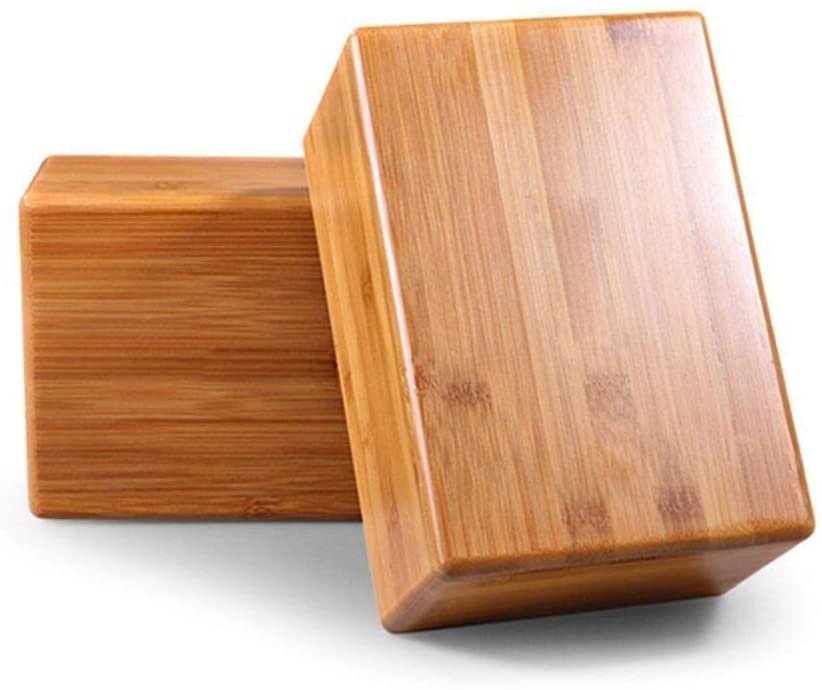
But props can be used to make the pose more difficult. For example, in Adho Mukha Śvānāsana, when a helper pushes a block against our buttocks he or she actually makes the pose more difficult (see Variation 7 of this pose in Props for Yoga, Volume 1). But this push teaches our muscles to work in the right direction. The prop is used not for support but rather for activation. When later we do the pose without this resistance, we can still imagine it and activate the muscles in the same way.
Props can also be used to decrease load from body parts that tend to be over loaded and make other parts heavier and more stable. This is when a prop is used to change the geometry of the pose. For example, in standing āsana-s the back leg should function like an anchor – it should be heavy and stable. But often, when entering the pose, weight shifts to the front leg and the back leg loses its stability. Lifting the front leg on a chair or block (see Variation 10 of Utthita Trikonāsana in Props for Yoga, Volume 1) changes the ‘normal’ geometry of the pose and thus allows us to feel how a well performed pose should be.
Still other uses of props have only mental effects. For example, placing a belt under the outer foot of the back leg in Utthita Trikonāsana (as in Variation 3 of this pose in Props for Yoga, Volume 1does not support the pose and does not make it more difficult. Neither it changes the geometry of the pose – the whole purpose of this usage is to bring sensation and awareness to a body part.
To sum it up, props make it possible for every person to enhance his/her Sādhanā (study and discipline of yoga), regardless of physical limitations. By using props adequately one can:
Perform āsana-s which are difficult to perform independently
Achieve and maintain correct alignment during the practice
Stay longer and relax in challenging āsana-s, thus attaining their full benefit
Study and investigate āsana-s on a deeper level
Enable people that suffer from chronic or temporary limitations to continue the practice and improve their condition.
The standing poses (asanas) group of asanas are called in Sanskrit Utthistha Sthiti – these poses are the basis for Iyengar Yoga practice. Standing poses open and strengthen the body, develop flexibility and build the muscle actions required for more advanced asanas. Beginners learn how to use the legs for activating the lower torso and how to use the arms for activating the upper torso. By extending the muscles of the legs and groins, one attains free movement at the hips. This allows the spine to extend freely and in the long run, will prevent back pain. By creating movement in the shoulder girdle, the shoulders retain their flexibility and the chest is broadened. This improves breathing and circulation. It keeps the body agile and light and the mind fresh.
Standing poses are a good starting point for learning yoga asanas: they are easy to imitate, involve more external action, and are less demanding mentally. In standing poses both the challenge and the rewards are more immediate and in a class environment, it is easy for students to observe the teacher and to see each other.
Standing poses are ideal for introducing the principles of alignment. When standing, our field of vision is broad, and we are more aware of the space around us. It is here that we learn to align ourselves by orienting our body in reference to the floor and wall planes and we correct the alignment of our limbs accordingly. In this sense, standing poses can lead us from Vikalpa (fantasy, delusion) and Viparyaya (wrong knowledge, illusion) to Pramana (valid knowledge).
Standing poses teach us to activate and integrate all our elements: we get rooting and grounding from our feet (Earth); we sense flow and movement within us (Water); we generate and release energy and enthusiasm (Fire); we open the chest and relax our skin to enable continuous, uninterrupted breathing and bring lightness (Air); and we create space in the body and develop awareness the inner and outer space (Ether).
To provide the best experiences, we use technologies like cookies to store and/or access device information. Consenting to these technologies will allow us to process data such as browsing behavior or unique IDs on this site. Not consenting or withdrawing consent, may adversely affect certain features and functions.
Functional Always active
The technical storage or access is strictly necessary for the legitimate purpose of enabling the use of a specific service explicitly requested by the subscriber or user, or for the sole purpose of carrying out the transmission of a communication over an electronic communications network.
Preferences
The technical storage or access is necessary for the legitimate purpose of storing preferences that are not requested by the subscriber or user.
Statistics
The technical storage or access that is used exclusively for statistical purposes.The technical storage or access that is used exclusively for anonymous statistical purposes. Without a subpoena, voluntary compliance on the part of your Internet Service Provider, or additional records from a third party, information stored or retrieved for this purpose alone cannot usually be used to identify you.
Marketing
The technical storage or access is required to create user profiles to send advertising, or to track the user on a website or across several websites for similar marketing purposes.
 Skip to content