• A Message for Challenging Times

    A Message for Challenging Times

    Hello Yoga Friends,

    As you may have heard or read, we are going through a difficult, critical period here in Israel. Regardless of political views, whether they are right or left, the current government is promoting measures that undermine democracy and individual freedom and that will change the character of our country drastically and beyond recognition.

    Many of us are experiencing difficult feelings these days; anger, frustration, helplessness and fear. I want to share with you a few thoughts about dealing with such feelings from a yogic perspective, as yoga is not merely the practice of asanas, but a way of life – an approach to life and to other people.

    When anger erupts unmanaged, it turns into rage, which blinds the mind, and from there the road to hatred, aggression and violence is short. The first principle of yoga is ahimsa – non-harm, non-violence. Violence leads to more hatred and fear and creates an ever-expanding cycle of violence.

    The Buddha said, “Hate has never driven out hate, only love can drive out hate.” Do we hate other people just because they have a different opinion? Does the threat we perceive cause our senses and consciousness to blur?

    When we get carried away with anger or even experience thoughts of violence, it is important to observe and check how anger manifests itself in our body, observing the anger as simply anger (i.e., not “I’m angry”, but rather, “There is anger”). Anger is a natural emotion. We all experience anger at times, but is it worth acting out of anger? Just turning our gaze to the sensations of our body can create a distance from this difficult emotion and enable us to begin to see things slightly differently – with less emotional upheaval and confrontation and with more self-composure.

    Sutra I.33 in The Yoga Sutras of Patanjali discusses the four qualities, or virtues, of the heart: “Maitri, Karuna, Mudita, Upeksha.” Maitri means friendliness, and loving kindness – a desire for all living things to be safe and well. The Buddha said we should treat all living beings as a mother treats her only child! True, it sounds a bit far-fetched, yet it serves as a compass that guides us in the general direction.

    We shouldn’t let the totality of this suggestion discourage or prevent us from cultivating this beautiful quality – to nurture an attitude of unconditional acceptance and strive for the happiness of others. Begin by setting an intention: be kind and compassionate to yourself, then to the people closest to you. Gradually, expand this practice to more and more people. When one cultivates and is immersed in such a state of mind and suffering arrives, then Karuna – compassion – arises; when you encounter others’ success, –Mudita, paragon and joy arise in the good fortune of others.

    But most relevant to our situation is the fourth quality: Upeksha: equanimity in the face of evil. Upeksha means that even when we encounter injustice, aggression and offense, we should not act out of anger or hate.

    This does not mean that we must accept injustice; on the contrary! We must oppose it with all our strength – firmly and decisively. We must be determined to do all we can to stop the violence. Equanimity is not indifference nor being disconnected.

    Can we do it without hating, without being violent ourselves? This is the big question and the imperative practice that is yoga. Can we oppose the injustice without denying or rejecting the person committing it?

    Peace cannot be attained by violence. The Buddhist monk Thích Nhất Hạnh said: “There is no way to peace, peace is the way.”

    Only if we learn to act in an impartial manner, without automatically reacting to anger and without letting hatred and fear propel us, can we reduce the cycle of violence and harm.

    It is not easy and requires a lot of practice. Every challenge in life is an opportunity for practice and growth, and this period provides us (in Israel, but also generally provides anyone confronting a difficult situation) with many challenges.

    May we learn to deal with these challenges in the yogic way!

    May Ahimsa be our motive and goal!

    May all be safe and happy!

    Namaste,

    Eyal

  • Boosting Your Smoking Cessation Efforts with Yoga and Other Helpful Strategies

    Although smoking cessation is difficult, it’s an important step that you need to take to attain a healthier life. That’s because smoking can increase your likelihood of developing health conditions, including cardiovascular diseases and cancer. Fortunately, yoga is useful in helping you quit smoking. Indeed, researchers from the American University explained that yoga aids in smoking cessation because it teaches individuals how to manage their smoking urges.

    In this article, we will discuss the power of yoga in smoking cessation and even touch on other strategies you can combine with yoga to help you quit smoking.

    The same journal article published by the American University illustrated that yoga is beneficial in smoking cessation because the practice encompasses breathing techniques and mindfulness meditation activities that help regulate emotions, cravings, and stress. In fact, our previous article on ‘The Effects of Yoga’ similarly shared that among the numerous benefits of yoga is its ability to reduce stress and create mental peace. Because of this, many researchers concluded that yoga, through breathing and mindfulness techniques, can help individuals quit smoking.

    For instance, the study entitled ‘Mindfulness For Smoking Cessation’ revealed that mindfulness‐based interventions aid in smoking cessation. This is because mindfulness‐based interventions teach individuals to pay attention to and work mindfully with negative affective states, cravings, and other symptoms of nicotine withdrawal. Through this method, smokers who want to quit can better control their thoughts and feelings rather than be controlled by them. As a result, they can better deter smoking urges when they arise, allowing them to stop the habit. It just shows that yoga doesn’t only promote your physical health but also your mental and emotional well-being, which supports you in your smoking cessation journey. The activity is thus excellent for amplifying the effectiveness of any other strategies you use to quit smoking. Below are a few such strategies that work great with yoga.

    Smoking Cessation Strategies That Work Well With Yoga


    Connecting with other people

    Changing habits that you’re used to is not going to be easy. That’s why connecting with other people, whether they’re your friends, family, or fellow smokers can help you get through these tough times. If you’re attending yoga classes, you can easily do this by hanging out with people after each session. Apart from connecting with fellow yoga enthusiasts, you can join communities for smoking cessation to meet people who share the same goal as you. With their presence, you’ll be able to keep yourself occupied and entertained, enabling you to forget your smoking urges. They may also give you valuable advice on how to transition to a smoke-free lifestyle using yoga and encourage you to continue when you feel like quitting.

    Keeping your hands busy

    Once you stop smoking, you’ll start to feel restless since you’re used to having something to do with your hands. If you don’t do anything about this, it may lead to a smoking relapse. Keeping your hands busy can help. Yoga, in this case, is beneficial since doing routines encourages you to occupy your hands and mind at all times. You can also use stress balls while meditating or doing breathing exercises, allowing your hand onto something that will take your mind off smoking and can physically prevent you from picking up a cigarette. If you don’t like rubber, you can choose stress balls made from different materials, such as sand, foam, and gel. There are also stress balls with inspirational messages on them to keep you motivated.

    Using NRT products

    As they come in different strengths, you can use them alongside yoga to gradually lower your nicotine consumption over time. As demonstrated by the different VELO nicotine pouches listed on Prilla, nicotine pouches are oral NRT products that contain small amounts of nicotine without any harmful tobacco leaves. For this reason, they’re preferable smoking cessation products that will help you gradually stop smoking. They also come in various flavors for a personalized nicotine experience. Another popular NRT product is the Nicorette nicotine gum from Johnson & Johnson. Like pouches, they contain small amounts of nicotine and are available in different flavors, such as fruit, cinnamon, and white ice mint. Since both products are orally administered and smoke-free, they offer convenient and discreet usage that you can use throughout your quitting journey.

  • Liberation Through Non-Attachment: Can Desire be Controlled?

    Liberation Through Non-Attachment: Can Desire be Controlled?

    Spiritual Traditions View Desire as a Cause for Suffering

    Spiritual traditions originating in the East aspire to liberate us from existential suffering (Dukkha). They approach desire as the cause of suffering. Therefore, they suggest that we relinquish desire. But desire and passion are central motives in our lives. Do we really want to give up our desires? Can we actually do so? If so, how?

    In the Yoga Sutras, sage Patanjali offers two means for quieting or restraining the fluctuations of the mind. Abhyasa – persistent practice, carried out devotionally and consistently over time; and Vairagya – dispassion, non-attachment, or the renunciation of desire (see Sutra I.12 and read more about Abhyasa & Vairagya).

    In his first noble truth, the Buddha describes the reality of suffering and dissatisfaction (Dukkha) that accompanies our sense of existence. In his second noble truth, points out that the cause of Dukkha is thirst. (Tṛ́ṣṇā in Sanskrit, Taṇhā  in Pali) – our never-ending desires and cravings that cannot be quenched:

    It is the craving that conditions renewal of being, which is accompanied by passionate pleasure, and takes delight in this and that object: namely, sensual craving; craving to become; craving for annihilation.

    The Buddha (2nd Noble Truth)

    Read more about Dukkha, here and here.

    “Craving to become” is our desire to express ourselves, to create, to develop. “Craving for annihilation” is the impulse to avoid life, fear, withdrawal, and suicide.

    But what is so wrong with Desire, really?

    When we crave and cling, we end up suffering because reality is continuously changing. We will not be able to hold forever onto the things that bring us happiness and joy. We will not always be able to reject or eliminate painful or unfortunate experiences.

    The formula is straightforward: clinging + transience = suffering

    Holding on to possessions, status, relationships, or anything else for that matter, is ultimately doomed to lead to suffering. The nature of things is impermanence. The people closest to us who bring us joy will not always be there. The property we accumulate with great effort cannot be taken with us to the grave in death, etc. Therefore, it is of interest to investigate the ancient traditions that speak of renunciation, dispassion, and non-attachment as a means to eradicate suffering.

    These traditions hold that suffering does not originate in external circumstances. But rather is a fundamental, inherent tendency of our consciousness. Disatisfaction, to crave what we do not have as well as to be aversive to many aspects of reality. For the most part, we seem to want ‘something else’, rather than being happy with the current state of affairs. Our happiness is tarnished by the fear of its own termination.

    The problem is not so much with wanting things, but with clinging to things. It is all right to enjoy life, but what happens to us when we cannot receive what we crave? What happens if reality is different from our wants and expectations?

    For example, you plan a vacation and imagine all the goodies you’ll enjoy. Yet, the actual vacation can never be quite as you imagined or expected it to be. Maybe the hotel you booked is not as nice as you thought, maybe the weather is not as you wanted it to be and so on. So, instead of enjoying the things as they are, you are captivated by your own expectations.

     Is it possible to renunciate desire?

    Desire is natural and inherent to our existence. What could be more natural than wanting the pleasant and pleasurable and rejecting the unpleasant and painful?

    When we are cold, we crave warmth, when it is hot, we crave coolness. When we are hungry, we crave eating. We long to live in comfort and well-being. When we are lonely, we crave company, we crave to be appreciated, respected, and loved. We want to purchase the new iPhone, the fancy car and whatnot. We crave health and security and to enjoy tastes, sights and sounds – all worldly sensory pleasures. When we are bored, we want to be interested, we want to develop, learn, progress and improve. We want a relationship and a satisfying sex life, we want to love and be loved. Sometimes we long to have children and when we do, we want them to be happy and successful and to respect and appreciate us.

    The list goes on and on… There seems to be no end to our desires. Desire is a central drive, a motivation for almost all of our actions, including for our spiritual practice. Who wouldn’t want to achieve awakening, nirvana and become a Buddha? Is it even possible to live without passion?

    Not to mention, our capitalist society encourages desire, the slogan “Increase your desire” appears on billboards and advertisements. We are encouraged to want more, to want what others have, to consume more. It is the very engine of the capitalist economy. For someone living in such a culture, it is difficult not to be influenced. What was not long ago deemed a luxury is viewed these days as a necessity (mobile phones are an example). It is difficult for us to accept the idea of giving up our desires. Renunciation of desires is an idea that sounds very foreign and strange to the average Western ear.

    But what exactly is Desire?

    There are many words in the English language that are a part of the semantic field of will and desire. Intention, longing, yearning, wishing, ambition, appetite, need, will, motive, impulse, passion, desire, clinging, craving, greed, and addiction, to name several.

    When you consider the end of this continuum – addiction, you can understand the suffering caused by extreme forms of desire. The addict must absolutely obtain the object of his desire and do so urgently. If they don’t, they endure intense suffering and may even commit horrific crimes without intending to. So strong is the need!

    Regardless of the word used, it is interesting to observe the experience of longing, or desiring. What do we feel in our body when a desire arises? What is happening there? Where do you feel it and how? What happens when the desire cannot be satisfied, when it is impossible to get rid of something that robs us of our joy? What is our response? Do we react strongly, just like an addict, or can we contain the disappointment. Can we understand that this is the nature of things, that it is not always possible to satisfy every desire, accept it, and move on?

    Renunciation of Desire is Radical

    Generally, we can say that Western, Jewish and Christian philosophical approaches view suffering as an inseparable part of life. In psychological therapy, we try to understand the cause of suffering and lessen it. Yet, for the most part, we believe that it is not possible to live without suffering at all.

    In addition, there are lofty aspirations and worthy goals for which we are willing to suffer. Even if we are not enchanted by the capitalist goals of accumulating property and power, there are still worthy goals we hold sacred, for which we are willing to fight and suffer. Goals such as equal rights, justice, freedom, democracy, access to education and medicine for all, etc. We are ready to fight to ensure that these goals are accomplished, even if that fight involves suffering.

    This sentiment is expressed in Leonard Cohen’s song Passing Through: “Men will suffer, men will fight, even die for what is right, even though they know they’re only passin’ through”

    It is clear to us that we need to fight against dictatorial and fascist regimes, which trample the basic rights of freedom of speech, freedom of the press, and the right to criticize and protest. And we are ready for a struggle that involves difficulty and suffering.

    We also advocate for technological progress. Technology improves the quality of our lives and makes them comfortable. Without desire, how can we move forward? Could the great inventors who discovered electricity, build computers and sent people to the moon do so without desire or sacrifice?

    But, as Eastern traditions perceive it, and in the approach of yoga and Buddhism, all this does not matter very much. The basic causes of suffering: illness, old age, and death are not treated by technological progress or social justice. Only turning our attention inwards, in an attempt to understand the root causes of suffering can teach us to avoid suffering.

    Perhaps exaggerating (but with a kernel of truth), one can argue that in terms of yoga, there is not much value in the achievements of science and technology. It is not very important to reach the moon, while we suffer here on earth. It is better to direct our efforts to live life without suffering rather than to try and improve our living conditions. The basic causes of existential suffering (illness, old age, death) are always waiting for us. We are guaranteed to encounter them sooner or later.

    Generalizing again, we westerners seek to diminish suffering, but the traditions that stem in the East aspire and even offer ways to be freed from suffering all together. It is a radical approach that claims that it is possible to live without suffering.

    One should carefully note the difference between pain, or an unpleasant experience, which is a fact, and the mental state which results. For the ordinary, unskilled person, who has not fulfilled his spiritual journey, pain causes suffering. But the Eastern radical claim is that it is not necessary and that it is possible to change our perception of reality in such a way. That we can experience physical or mental pain, without suffering.

    How do ancient traditions propose we eradicate suffering?

    This is a big and challenging question that can sometimes take a lifetime (or more) of practice. I will try to shortly point out the different paths offered by these traditions:

    One path, largely represented by the classical yoga of Patanjali, advocates turning one’s back on worldly-sensory pleasures (Bhoga). Disolve in inner inquiry and meditative absorption.

    The yoga sutras of Patanjali propose a different use for the senses; instead of letting our senses flow outwards towards external objects (sights, sounds, smells, etc.), we should direct them inwards, towards our inner realm – this is the fifth limb of Ashtanga Yoga – Pratyahara.

    Following the senses, the consciousness can be stabilized and turned inwards to explore the inner reality and discover the eternal, unchanging essence – the deep infrastructure of awareness – Purusha, or Atman. Yoga holds that each of us has an undying inner essence of pure awareness. That it’s is the basis of our consciousness. In his inward journey, the yogi comes into contact with this reality. Thereby, the yogi discovers within himself supreme and unconditional happiness (Ananda).

    When the yogi experiences Ananda, the sensory impressions and passions that arise in their wake, lose their grip. The yogi no longer needs to lean on any external sources of and can rest in divine peace and bliss. Enlightened yogis describe this bliss as surpassing all ephemeral joys and pleasures that can be obtained by satisfying earthly desires and cravings.

    This path disconnects the yogi from action in the world, and is largely intended for hermit monks who devote themselves completely to inner inquiry and meditation. You may feel that you are not ready to detach yourself from this world, from all the joys that come with a life of creation, love, and service. In such a case, the way, proposed by the Bhagavad Gita, may be more suitable (see below).

    The Buddha’s Approach

    The path offered by classical yoga and by the Upanishads is based on a metaphysical assumption regarding the existence of a permanent cosmic essence, which is abstract and unchangeable – the Brahman, and its individual counterpart, the Atman. When we grasp the Atman we are connected to this eternal wholeness and easily renounce all cravings.

    The Buddha, however, denies the existence of such an abstract, eternal essence. Instead, he proposed to meditate in order to observe deeply and understand the source of our fluctuating desires . Then, recognizing the desires as they are, one realizes that clinging onto desires is the source of one’s Dukkha, and thereby, letting them go.

    The Buddha observed that even the desire not to desire is in itself a desire, and as such – a source of suffering. His solution, therefore, was not to resist desires but to understand the internal dynamics of the consciousness that gives rise to desires, and thereby to let go of them.

    The Buddha offered practical guidelines for living in a way that will gradually allow us to let go of all cravings and clinging (excuse me for over-simplifying his deep and intricate teachings), namely – the fourth Noble Truth

    The inspiring myth of the night of the Buddha’s awakening, tells of the demon Mara. The lord of temptations and desires, who was devastated by the possibility of Buddha’s awakening (which will deprive him of his powers), and sent his armies to threaten the Buddha. It is said that the ‘mind of the great being did not move‘. While sitting there, unaffected by Mara’s threats, Mara’s arrows turned into flowers… Seeing that the threats did not work, Mara sent his beautiful, young daughters to dance in front of the Buddha to tempt him and shake his calmness. Still without success!

    The prevailing meaning of ‘the middle way’ that the Buddha had taught, is not to indulge in sensual pleasures on one hand. Not to practice extreme austerities and deny the basic needs of the body on the other hand. Yet, there could be another meaning: when facing pleasant (temptations) or unpleasant (fear) sensations. One should not ignore and suppress them, but also not be moved (mentally) and not react in a habitual, automatic manner.

    By observing the bodily sensation generated by our perceptions of the world calmly, without ignoring and repressing them, but also without reacting to them, we can learn to let go of our natural tendencies of clinging and aversion.

    The central message of the Bhagavad-Gita

    The main message of the Bhagavad Geeta is summed up in sloka 47. In the second chapter , where Krishna says to his disciple, Arjuna:

    To action alone hast thou a right and never at all to its fruits; let not the fruits of action be thy motive; neither let there be in thee any attachment to inaction.

    Translated by S. Radhakrishnan

    In other words, the Bhagavad-Gita does not preach detachment from the world; on the contrary: ‘let there be in thee any attachment to inaction’. Instead, we must act in a different way, act without clinging to the fruits of our actions!

    I, and probably you, the reader, like all ordinary people, work in order to obtain fruit, to reach some desired result. For example, we study to obtain a degree or acquire a profession. We go to work thinking about the salary that will arrive at the end of the month. We exercise to become fitter, etc. If you look deeply at the motive behind the actions you take, you will probably almost always, discover that there is a conscious or unconscious expectation for some kind of fruit.

    The message of the Bhagavad-Gita is revolutionary: action should not be done for the purpose of the fruit. We have no right to the fruit, only to the action itself.

    If we work for the fruit, in order to gain a profit, or to promote things that are important to us, and cling to the desired future result, then, if the result is not achieved, we will experience disappointment, frustration and failure. That is, we will suffer on one level or another. However, if we do not crave the fruit and concentrate on the quality of the action, acting according to the dictates of our conscience, without clinging, then we will not suffer, even when there is no fruit.

    The fruit is in the future and therefore is always imaginary. Since we have very limited control over reality, it is possible, and perhaps even probable, that the result will not be as we imagined it. Then we are disappointed. However, if our action is correct and is carried out skillfully (that is, without longing for fruit), then we can continue to be involved in the world, but in a different way.

    The Bhagavad-Gita, therefore, offers a revolutionary way of acting in the world, acting without craving for the fruits of our actions.

    In Summary

    In order to train ourselves towards meditative absorption and inner happiness that is unconditioned by life’s circumstances (the Yogi’s path). Learning to observe the nature of desires and let go of them (the Buddhist approach), or to act without craving the fruit (Bhagavad Geeta), a deep transformation of consciousness is required. Such a transformation cannot occur only through intellectual understanding and requires prolonged and dedicated practice. Yoga is a practical philosophy. Contrary to the theoretical philosophy we have come to know, yoga is interested in explaining the inner and outer reality. It is not for intellectual satisfaction, but to teach us to suffer less (or even eradicate suffering altogether). This can only be achieved through practice, observation and inner inquiry.

  • Yoga & Aging: How to Sync the Practice With the Aging Process?

    Yoga & Aging: How to Sync the Practice With the Aging Process?

    Introduction

    This post is written following the Yoga & Aging program in which I was invited to participate along with three other Iyengar yoga teachers. In this post, I share answers I gave to questions I was presented with in the panel, which kicked off the program. This panel’s recording from Dec 4, 2022, and information about the upcoming Yoga & Aging workshops are available at https://yogaandaging.com/).

    The program includes 4 workshops that will take place throughout 2023 (Starting from January, 29. Mine will take place on April, 2) and in this post, I would like to share what I intend to teach in my workshop.

    I will also discuss aging in general and briefly review the traditional approach to aging.

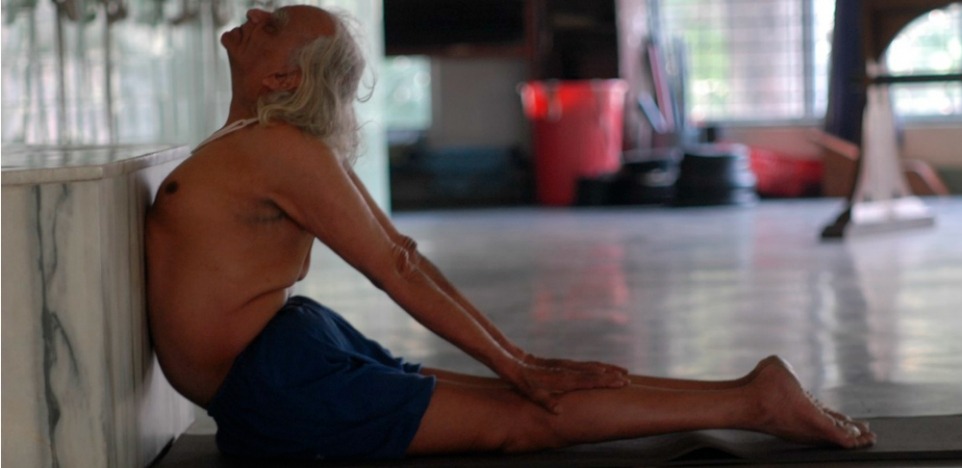
    B.K.S. Iyengar practices yoga when he aging
    B.K.S. Iyengar practice at old age

    1. The Challenges and Joys of Practicing Yoga when Aging

    The two questions I was asked were:

    1.       What are the challenges and joys of aging in yoga?

    2.       How do we accept our mortality?  Do we need to shift from hope to finding contentment? Or a sense of fulfillment in being part of a bigger whole? 

    Let’s address each question separately.

    We are faced with many challenges as we age. We lose capabilities, become weaker and more vulnerable and generally face more limitations. We may experience fear of losing additional capabilities, which may in turn lead to anxiety. We may even feel less relevant in our fast-changing technological society.

    However, in my opinion, the two main challenges we need to face in our practice are:

    ·         How to sync yoga practice with the aging process

    ·         How not to lose the freshness of the practice. How to remain curious and continue to explore new territories of our mind-body. 

    How to Sync Yoga Practice with the Aging Process?

    We shouldn’t limit our practice prematurely, nor try to ignore the fact that we are aging, and attempt to maintain the same practice as if nothing has changed. Both attitudes are not in sync with the reality of aging. Some age mentally faster than physically and unnecessarily limit themselves, being too cautious in their practice (and life), overtaken by fear. Others deny the aging process and attempt to keep the same practice regardless of their age.

    Some use age as an excuse as to why not practice, as B.K.S. Iyengar wrote in The Tree of Yoga:

    “Why is an old man fond of sex? Why does his age not come to his mind at all? If he sees a young woman his mind will be wandering, even though he may have no physical capacity. What is the state of his mind? He would like to possess her, would he not? But ask him to do a little yoga, or something to maintain his health. ‘Oh, I am very old’, he says“.

    The Tree of Yoga in the chapter Old Age:

    Iyengar himself continued to practice, until his last days, when he was over 95! His practice changed a lot over the years and in old age, he used many props and focused on inversions and backbends with support.

    If our practice over the years was correct and we have developed sensitivity and wisdom, we would know how to sync our practice with the aging process, neither overdoing nor underdoing.

    Aging is not only about decline. We also refine our practice as we age. Iyengar’s practice in his 70s was more precise, mature, and beautiful than in his younger years (there is an inspiring set of photos that demonstrate it by comparing photos from Light on Yoga with photos of his practice when he was seventy years old). He wrote:

    “Learning is a delight, and there are many delights to be obtained from the practice of yoga. But I am not doing it for the delight… The sensitivity and intelligence which have been developed should not be lost. That is why the practice has to continue“.

    ibid.

    Aging enables more depth that comes with experience and wisdom, and that has many benefits and joys. We don’t need to prove ourselves; we learn to accept ourselves as we are. We have more time; we are out of the ‘rat race’ so we can devote more time to practice without worrying about worldly issues.

    We become like old trees that bear sweet fruits, trees that offer shelter and shade. There is great joy in giving, in teaching from our wisdom and experience. There is also joy in the appreciation we receive from our students. While in the technological professions, one is considered irrelevant after 40, in yoga, the more experience one gains, the better teacher he or she becomes!

    Aging also forces us to be more considerate and kinder to our body, to our vulnerability, weakness and limitations – this teaches us consideration and compassion. Our practice becomes more profound and we rip the fruits of our many years of devoted practice. It’s a great joy! Rather than being egocentric and taking from the world, we can now give more to our students and to the world.

    How Not to Lose the Freshness of the Practice

    Some old people have the attitude of: ‘been there, done that. I have nothing new to learn or experience. This is who I am and I’m not going to change at this age’. However, if the practice has been always explorative and creative, then even as we age, we will be able to maintain a fresh mindset and outlook, treating every day and every practice session as a new learning opportunity.

    In an interview Iyengar gave to young students he said (in Aṣṭadaḷa Yogamālā):

    “I belong to the old generation and by the grace of yoga I am still steady and stable to fit into this new generation. This credit goes to my yogic Sadhana. As I kept up my practice in that advertant stage I do not see any conflict between me and the new generation… because my practice is afresh each day, the energy that flows in my life… is like a flow of a river with fresh water…”

    Aṣṭadaḷa Yogamālā, Vol 8, p. 235, 2007

    2. How do we accept our Mortality?

    How do we accept our Mortality? Do we need to shift from Hope to finding Contentment, or a sense of Fulfillment in being part of a bigger whole?

    The ultimate answer of a yogi would be:

    “Death is unimportant to a yogi; he does not mind when he is going to die. What happens after death is immaterial to him. He is only concerned with life – with how he can use life for the betterment of humanity“.

    The Tree of Yoga, the chapter: Death

    Accepting our mortality is definitely a great challenge. Spiritual traditions often see the entire life as a preparation for a peaceful death. Our identification with our body is so very strong. Our entire self-image is strongly dependent on this identification. Patanjali said (in sutra II.17, 25) that this identification is the cause of our Dukkha (sufferings). He continues: “through right knowledge breaks the link binding the seer to seen. This is kaivalya, emancipation“.

    Although we know theoretically that everything, including our body, is subject to change, when we lose some of our capacities, experience more difficulties, meet severe limitations, or suffer from injuries, we often find it hard to adapt to the changes and become frustrated and even depressed.

    However, as we age, we develop a greater tendency to the spiritual aspects of yoga, we start to connect with the pure, eternal consciousness (Purusha), and this can help us to face death more peacefully. Observing change in nature and in us, we learn to accept and even welcome change. We can look at the cycles of birth and death from a more objective perspective. We learn to lessen the attachment to and identification we have with our changing bodies.

    It is a fact that the fuller the life you live – the less you are afraid of death. If you live actively, engaged in self-development, and in giving to others, you will be less prone to fear. If you learn to live peacefully, it will be easier for you to face death.  Even though the fear of death may not entirely vanish, you will be able to handle it without being devastated.

    Yoga is an endless process of learning and development and it keeps us active and explorative. So, the life of people who continue their Sadhana is full and may even become fuller with aging.

    Do we need to shift from hope to finding contentment?

    I definitely think so. Hope belongs to the future, it is an attachment to an imagined future, that will probably never fold out to be as we imagine it. Depending on hope is an escape from what is in the present moment. Therefore, the yogi does not center his or her focus on hope, but on living actively and contributing to society.

    The Traditional Approach to Old Age

    In traditional cultures, there is an inherent, deep respect for old people, so much so that ‘old’ is almost synonymous with ‘wise’. Definitely, the more experience we have the wiser we become. This is especially true for people who are involved in various forms of spiritual practice. With more years of practice, we dive deeper into ourselves and get better clarity, so our understanding of ourselves and of the world is refined.

    The Hindu understanding of life phases can shed light on how traditional societies dealt with aging. Of the four stages of life defined by the Hindu tradition, the last two are relevant to our discussion. In an interview rendered as the Foreword section of the book Iyengar Yoga for Menopause, Iyengar discussed these stages:

    • ·         “Vanaprastha (retirement) – In this third phase of life, around the age of 50 to 60, is the time to intensify spiritual practices. One can spend more time walking and meditating in nature, this help to escape the daily stress and get more in touch with Mother Earth.
    • ·         Sannyasa (seclusion from the world) – aging and the search for inner growth are associated with renunciation and giving up worldly things and obligations and also vows of renunciation. It is the last of the four stages of life.

    To be at ease in each stage is Sva Dharma: one’s duty, one’s responsibility and also life’s task.

    ‘Aging is the quest for inner growth!’

    From: Iyengar Yoga for Menopause, Geeta Iyengar, Rita Keller, Kerstin Khattab

    Discussing aging women, they add:

    “For women, post menopause is mostly during the third phase, the Vanaprastha, where one slowly withdraws from the storm of activity. Motivated by joy, and without being less active, the women in this stage are free from self-aggrandizement. A wise consular and rich in life experience…

    Menopause is a transition period when you may come out as a mentally and psychologically more mature person, ‘dropping your old skin’. Such processes of maturation and transformation may happen during certain times in your life, like in puberty, marriage, and motherhood. In our society, we have the tendency to associate menopause and loss and aging, or even consider it a kind of disease. This is definitely not the case”. (ibid.)

    In his book Light on Life, Iyengar summarizes it as follows:

    “Yet unlike retirement in the West, which is just an end to productive work, this is a spiritual stage filled with growth and learning. It is a stage when this detachment allows us to live ever more loosely in relationship to our ego”.

    Light on Life, p. 245

    3. My Workshop Theme: How to Sync Yoga Practice with the Aging Process?

    For me, the essence of the practice doesn’t change with aging, only the form in which it is carried out. The essence is expressed by Patanjali as Kriya Yoga (sutra II.1):

    I apply myself (Tapas); I study myself (Svādhyāya) and I surrender myself.

    These principles do not depend on what you can or can’t do. Therefore, this essence should not change with aging. However, the form should change! We can’t do everything we used to do and we are going to progressively lose more of our capabilities. We need to shift our perspective on practice. Rather than attempting to conquer new, more advanced poses, we should dive deeper into ourselves, stay longer in poses, adopt a meditative approach, and use aids and props.

    In my workshop, we will learn how to use props to adapt the practice to our changing capabilities and how to stay longer in supported asanas that open the body and keep the mind fresh and alert.

    In the first part, we will study how to use chairs and other props to maintain our backbend practice. This will open the chest and prepare our lungs and mind for the second part in which I’ll be teaching the art of Pranayama.

  • About Backbends

    About Backbends

    Introduction

    This is an extract from Eyal’s new book (forthcoming): Props for Yoga, Vol IV, Backbends. The forth book in the Props for Yoga sequence that shows how to use props to improve and deepen the practice of backbends.

    “Through back bends practice, using your senses of perception to watching the ‘behind’ and attracting the mind into the back part of the body, gradually the meditative attitude will become natural.

    In other āsanas, the attention on the back is not revived to such a point that the mind shifts outwards. Backbends have principles and reveal the functioning of the mind and Intelligence. Backbends naturally lead to the real aspects of life and the higher aspects of yoga”.

    B.K.S. Iyengar, Aṣṭadaḷa Yogamālā

    Urdhva Danurasana with blocks

    Backbends keep the body vital and agile and make the mind fresh, joyful, and light. They are uplifting and induce optimism and joy; hence, they are useful antidotes for depression, despair, and pessimism. They also help us to age gracefully and retain our clarity and good spirit.

    Backbends have an important role in the yogic path. they help us to overcome obstacles (antrāyās, see sūtras I.30-31) such as styśna (lack of perseverance), samśya (doubt), ālasya (laziness), anavasthitvāni (inability to maintain the achieved progress) and help us to overcome the symptoms of duḥkha (sorrow) and daurmanasya (despair).

    Quotes About Backward Bends

    B.K.S. Iyengar wrote about the effect of Dhanurāsana:

    “In this posture the spine is stretched back. Elderly people do not normally do this, so their spine get rigid. This āsana brings back elasticity to the spine and tones the abdominal organs. In my experience, persons suffering from slipped discs have obtained relief by the regular practice of Dhanurāsana and Śalabhāsana without being forced to rest or to undergo surgical treatment” .

    Light on Yoga, p. 102

    Referring to a variation of Ūrdhva Dhanurāsana (called Viparīta Chakrāsana in Ūrdhva Dhanurāsana, he wrote:

    “It tones the spine by stretching and keeps the body alert and supple. The back feels strong and full of life. It strengthens the arms and wrists and has a very soothing effect on the head…”

    Light on Yoga, p. 102, p. 365 (see Plates 488 to 499)

     In Yoga – A Gem for Women, Geeta Iyengar writes:

    “… Asanas in this section stretch the spinal column in a concave movement and are very important, as the anterior spine extends in backbends making the blood circulate more freely. The opening of the chest in these particular postures energizes the lungs and breathing becomes deep with the result that oxygenated blood circulates all over the body”.

    Yoga – A Gem for Women, p. 215

    And then in the “overall effects”, she adds:

    “The concave movement of the spine in these āsanas is somewhat unusual which is not normally found in our everyday life. They tone and train the spine and the muscles of the back to bend backwards. They rejuvenate the spine and develop physical strength and vitality. They bring freedom of movement and are ideal for those suffering from stooping shoulders, hunchback, slipped disc, stiff spine, rheumatism and backache”.

    Yoga – A Gem for Women, p. 219

    She continues by stressing the mental effects of these asanas:

    “Dullness and depression vanish with practice of these āsanas, they bring courage and willpower and give mental courage to bend backward”.

    Yoga – A Gem for Women, p. 219

    For the more advanced, Ūrdhva Dhanurāsana and Dvi Pāda Viparīta Daṇḍāsana, she mentions the effects of using props:

    “Weakness of the mind with attendant anxious states and depression is predominant among women… These two āsanas are excellent for these conditions. They have a magical effect on the mind. When practiced with support they relieve tension, relax the nervous system and rest the brain… they are of great help in keeping the body supple and active, the mind sharp and alert, the conscience clear and the soul pure.”

    Yoga – A Gem for Women, p. 224

    In the Iyengar Yoga tradition, it is customary to teach backbends in the third week of the month and Prāṇāyāma in the last week of the month. Many teachers are familiar with students who dislike the third week (often they are the ones who like the fourth and vice versa…). This is understandable. Backbends are movements that we rarely do in our adult daily life. We bend forward (even if only to tie our shoelaces), and we twist (e.g., turning back to see who called our name). So, backbends often raise the fear of harming one’s back. Also, some of the backbends, e.g., arching from Śīrṣāsana to Viparīta Daṇḍāsana, raise an instinctive fear of going to the unknown, since when we do not see where we are heading.

    However, the determined student will find that, with practice, one can overcome such fears, develop confidence and even start liking the challenge of backbends. In this way, backbends help to combat the afflictions (kleśas) of dveṣa (aversion) and abhiniveśḥ (fear) (see sūtra II.3) and develop a better discernment (vivekakhyate) regarding our abilities and limitations.

    B.K.S. Iyengar used dynamic backbends when working with addicts:

    “For addicts … I choose the āsana and the Prāṇāyāma which removes the emptiness, defeat and dejection in them. The standing āsana, inversions and backward extensions are very effective. Relaxing āsana like forward extensions do not help them much as their minds go towards depression. … Asana such as Ūrdhva Dhanurāsana, Viparita Daṇḍāsana, Viparita Chakrāsana … exhilarate and bring cheerfulness in them.”

    Aṣṭadaḷa Yogamālā, Vol 4, p. 102

    I find these words relevant to all of us. Practicing backbends is very effective when we feel gloomy or sad or with low energy. They increase the circulation and tone the nervous system: “if you do backbends, you draw blood to the entire spinal muscles” (Aṣṭadaḷa Yogamālā, Vol 5, p. 219)

    Of course, one should always maintain a balanced practice since: “if only backbends are performed, then the spinal muscles get acclimatized to such movements and rebel against forward bends or balancing asana” (Aṣṭadaḷa Yogamālā, Vol 7, p.339).

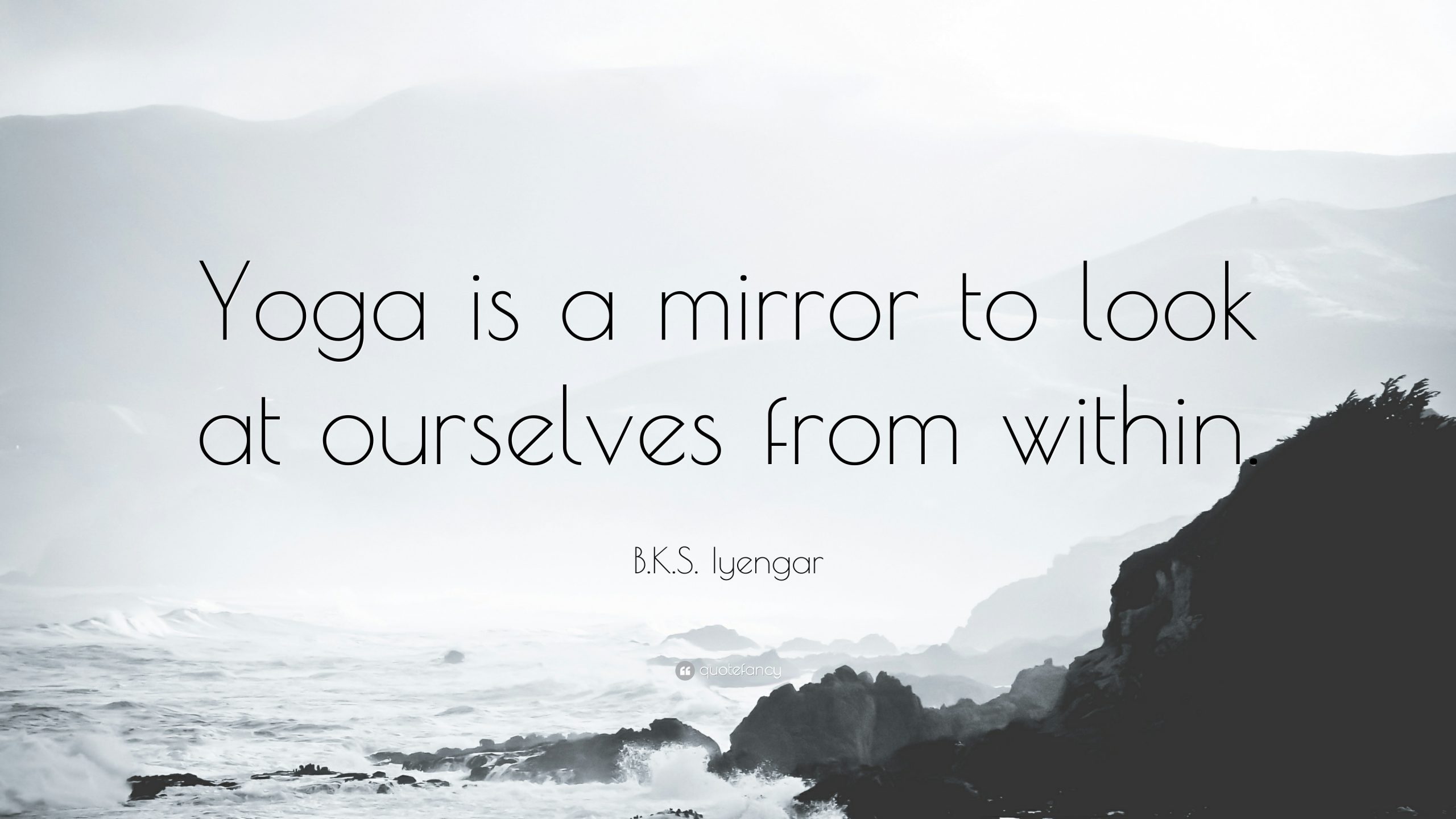
  • “Yoga is a Mirror to Look at Ourselves from Within”

    “Yoga is a Mirror to Look at Ourselves from Within”

    This quote from B.K.S. Iyengar defines yoga as a special kind of mirror, which, unlike any standard mirror, can reflect our inner mental state. How can yoga serve as such a mirror?

    We have the ability to connect with ourselves in every activity that we partake in. Theoretically, in every action we take, we can observe tendencies and mental traits such as carelessness vs. perfectionism, excessive recklessness vs. over-cautiousness, hastiness vs. prudence, procrastination vs. overactivity, patience vs. short temper, ability to focus vs. distraction, and so on.

    These tendencies and traits we bring with us to the mat, and we can watch them in our practice. However, there are particular reasons why Iyengar claimed that yoga as opposed. To any arbitrary activity can serve as such a magical mirror to look within. Yoga is a unique activity in many respects.

    First and foremost, the practice is a lab to explore ourselves; i.e., we pause from our daily activities and the business of our lives and devote time to be with ourselves, to observe, explore and study ourselves (Svādhyāya). In our daily lives, many things happen rapidly and often simultaneously. We need to react and multitask in a timely manner. As a result, we are usually too active and reactive and cannot pause to look deeply and observe.

    When we practice āsanas we must be fully mindful and attentive; we must seek a balance between stability and spaciousness, effort and effortlessness, over-extending ourselves and lagging behind. We must bring awareness to what we are doing and be present.

    When we are mindful and concentrated in this way, our nervous system relaxes and our mind becomes quiet and clear. So, while most of our daily activities create much disturbance, over-activation of the sympathetic nervous system, and lots of mental noise, yoga practice does the exact opposite – it activates the parasympathetic nervous system and creates mental poise.

    When the mind becomes clear, it can reflect like a quiet lake. We can look deep inside and observe the deeper layers of our inner lake. Then we can see our hidden traits and tendencies in a neutral, objective way; we can learn our natural ways to react and consider whether these reactions are beneficial for us and for our environment and whether they decrease or increase our suffering. Then, we gradually become more mindful and this mindfulness extends into our daily lives. We learn to respond appropriately, rather than react automatically. We become freer as we are less bound by mechanical behavioral patterns which often lie below our conscious awareness.