• From Kriya Yoga to Ashtanga Yoga; Means for Quieting the Fluctuations of Consciousness

    From Kriya Yoga to Ashtanga Yoga; Means for Quieting the Fluctuations of Consciousness

    By Eyal Shifroni
    Translation from the Hebrew original: Eleanor Schlesinger

    From Kriya Yoga to Ashtanga Yoga
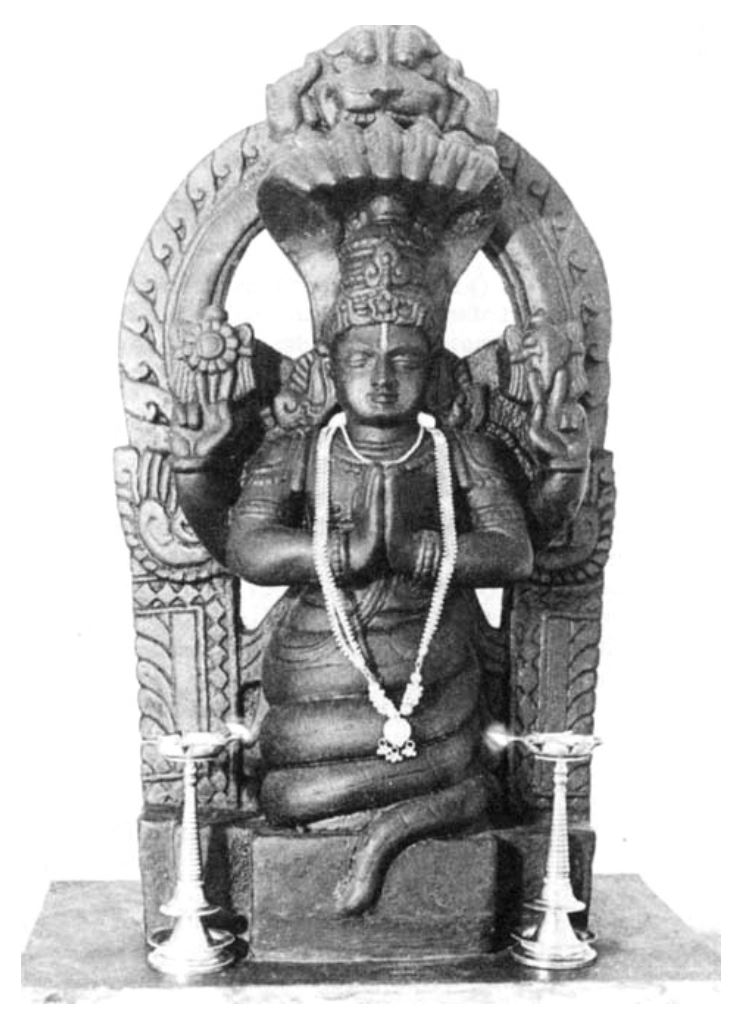
    Sage Patanjali

    What are the pillars of a spiritual path? What characterizes spiritual practice and what should be the attitude of the sadakha(1)? Patanjali’s Yoga Sutras provide answers to these questions. In chapters one and two of the Sutras, Patanjali introduces different ways of quieting consciousness. It is interesting to compare the ways in the first chapter (the chapter on samadhi) with those of the second chapter (the chapter on sadhana). Chapter 1 presents the general principles of abhyasa and vairagya, while chapter 2 presents an expanding list of ways and techniques for realizing these principles.

    Chapter two opens with the introduction of Kriya Yoga, the yoga of the three pillars (work, study, and devotion). All three are required in order to progress on a spiritual path. It is interesting to analyze the three components of kriya yoga and compare them with the three main paths of yoga: karma, jnana, and bhakti and with Ashtanga yoga, the yoga of eight limbs, which Patanjali presents in chapter two and at the beginning of chapter three.

    This article will touch upon these topics.

    The Yoga Sutras begin with the definition of yoga as the cessation of the fluctuations of consciousness (sutra 1.2). Patanjali defines yoga but does not stop there. Yoga is a practical path, a disciplined practice, not merely a philosophical theory. Therefore, further down the text, Patanjali offers different means to approach the goal of yoga. The first reference Patanjali makes regarding those means is found in sutra 1.12:

    Abhyasa vairagyabhyam tan nirodhah
    Practice and detachment are the means to still the movements of consciousness.

    Patanjali presents a two-tiered method: Abhyassa – practice and Vairagya – letting go, or non-craving. Abhyasa is the active aspect, the effort that must be invested in order to progress. Vairagya is an approach.

    The definition of abhyasa is presented in Sutras 13 and 14:
    Sutra 1.13. Tatra sthi-thau yatnoh ‘bhyaasa ha
    Practice is the steadfast effort to still these fluctuations (2).

    Sutra 1.14: Sa tu dirgha-kala-nairantarya-satkara-asevito drdha-bhumih
    Long, uninterrupted, alert practice is the firm foundation for restraining the fluctuations.

    Abhyasa and Vairagya are two sides of the same coin that complete one another: practice is essential as yoga is not purely an academic subject;  progress in yoga cannot be achieved through philosophical study of the meaning of yoga, or through speaking about yoga. A comprehensive transformation of the body, mind and consciousness is required here. Only practice: repeated performance of purifying actions on the physical and mental levels can bring about real sustainable transformation. Every complex skill requires repetitive training, you can not learn to play musical instruments, become an athletic champion, succeed in juggling, etc. without spending many hours training.

    In all of the above areas training is essential, but there is no mention of vairagya, non-craving. On a spiritual path, practice alone is not enough. Practice, by its very nature, involves effort, exertion of willpower, and discipline. All of these are very important, but without vairagya we may be caught in a loop in which our aspirations nourish the ego, and the more we strive, the further our goal will slip away. Instead of cultivating serenity, we will cultivate competitiveness and ambition. Therefore, Patanjali completes abhyasa with vairagya – letting go, non-craving, introspection.

    Practice necessarily presents duality: there is a purpose or a goal – we want to transform, to get elsewhere. In other words, there is a difference between where we are now and where we want to be. We are eager to succeed, to achieve, and therefore are aimed at the future. But the state of liberation requires being in the present, being with reality as it is, without wanting to change or achieve anything, without striving to be elsewhere. Vairagya or non-craving is the missing component that settles this duality. Non-craving is the ability to accept things as they are, without striving for more. To see the perfection and beauty of what is, of the present moment, without wanting to change, without aspiring to goals that belong in the future.

    In Chapter 1 Patanjali defines abhyasa but does not offer any guidelines or techniques. It’s about effort, attention, and perseverance – these are the characteristic of practice, but there are no details of any techniques, we do not exactly know what to do while practicing. What kind of effort is required here?

    The answer is that it takes effort to stabilize the mind. Such an effort does not necessarily involve sweating. It is possible that some of us view the practice as mechanically repeating the same action over and over again in order to perfect an ability. Yet, even sitting for half an hour without moving requires effort. This is a different kind of effort that is both mental and physical.

    Following the sutras that deal with the means, Patanjali turns (beginning with Sutra 1.17) to define different types of samadhi. Then, in sutra 1.20 he presents five “vitamins”(3) that help attain ‘high’ samadhi  (super-conscious samadhi), namely: shraddha (belief), virya (energy, diligence), smriti (memory), samadhi (meditative absorption) and prajna (spiritual insight).

    Faith is required for us to embark on a journey; if we don’t believe the path can lead us to a better place, we will not embark on it. Strength is required to walk the path – determination is needed to overcome the obstacles that will undoubtedly arise on the way; you need a strong will to stick to practice and persevere in it. Faith (shraddha) and strength and diligence (virya) complement one another. Faith is metaphorically attributed to the mother who supports and enables the journey, while energy and diligence are attributed to the father who provides the necessary strength.

    Smriti (memory) is mentioned here in the sense of remembering, remembering to pay attention – the problem in every practice is distraction or oblivion: we decide to practice, to observe, and be attentive, but forget and find ourselves repeatedly captivated by old habits. In order to get out of our habits and conditionings, we need to develop concentration and attention that will allow us to remember to be present – on the yoga mat, or in any activity, we may pursue. Maintaining attention and presence without distractions (distraction is a type of forgetfulness).

    A combination of faith, strength, and focused observation enables deep concentration or samadhi, this is where spiritual insight stems from. We emerge from the delusion that characterizes our ongoing perception of reality. Therefore, faith summons great strength; strength, in turn, enables a powerful memory and those enable meditation through which wisdom and spiritual knowledge (prajna) are attained.

    In the continuation of the chapter, Patanjali discusses the obstacles that distract the mind (1.30-31). Of course, Patanjali does not limit himself to detailing the obstacles to be expected by the practitioner and the spiritual aspirant but suggests different ways to overcome these obstacles and clarify consciousness (chitta prasadanam). In Sutras 1.32-39 Patanjali lists eight different ways of doing so. One can marvel at the breadth of this sage and his ability to contain different ways. The different ways are briefly mentioned but we do not yet have a method, a practice that will help us, ordinary mortals who did not attain samadhi at birth, to achieve ‘citta vritti nirodha‘ – or ‘to quiet the fluctuations of consciousness’. This is the theme of chapter 2.

    From Kriya Yoga to Ashtanga Yoga

    Chapter 2 opens with the presentation of the yoga of action, Kriya-yoga: the three-pillared yoga,

    Sutra 2.1: Tapah svadhyaya ishvara-pranidhana kriya-yogah
    Burning zeal in practice, self-study and study of scriptures, and surrender to God are the acts of yoga.

    It is interesting to note the transition from the two (abhyasa and vairagya) to the three. This is the beginning of a process of disassembling and detailing that will continue throughout the chapter.

    What are tapas, svadhyaya and ishvara-pranidhana?

    Tapas – a burning desire to Practice, the Purifying Fire

    The Sanskrit root of the word tapas, tap means “cook”. Fire (agni, in Sanskrit) is needed for the cooking process in order to purify and transform the food. Tapas is sometimes translated into heat, in the Tree of Yoga B.K.S. Iyengar writes:

    “what is tapas? Tapas is usually translated as austerity, but its meaning is better expressed as burning desire. It is a burning desire to cleanse every cell of the body and every cell of our senses, so that the senses and the body may be made permanently pure and healthy and leave no room for impurities to enter into our system”.

    To change habits that we know are unwholesome or even harmful, we need strength, therefore resistance must be created. Such resistance creates friction, which in turn forges heat that purifies, strengthens, and changes us – this is tapas. Tapas, therefore, manifests the quality necessary to adhere to abhyasa.

    The great religions include various austerity practices, such as fasting or taking a vow of silence, intended to purify the body and mind, strengthen willpower, and create inner change. Fasting allows us to look at the habits of how we feed and see food as something that is not self-evident. Fasting also allows us to learn what food means for us, socially and emotionally, beyond the basic need to nourish our bodies. It can help us understand the extent to which we rely on food for a sense of satisfaction and even to reduce boredom and entertain ourselves.

    When we avoid unnecessary talk we save energy and do not emit words that might harm others or ourselves. Every spiritual path involves various forms of self-restraint and distancing oneself from the pleasure of the senses.

    As noted, tapas can also mean austerity, which is a way of building character and willpower by turning away from the pleasures of the senses and the vanities of this world. But austerities are also dangerous. We may harm ourselves, harm our body or mind. St. Francis of Assisi practiced extreme austerities throughout his life. And at the end of his life, he confessed to his students that he had “abused this donkey” (meaning he abused his body). The Buddha, too, after six years of extreme austerities, discovered the middle way by observing a Lauta player. He noticed that when the player stretched the strings too much, they tore, but when they were not tight enough, no sound was produced. The middle way means that we act without being dragged towards pleasures, and without needing to satisfy every desire, but at the same time, we do not radically avoid anything that is pleasing or joyful.

    Yoga practitioners need tapas every morning in order to get out of bed and unroll the mat (many say it’s the most difficult asana …). But a less obvious aspect of tapas is the honesty and truth we need to get out of a wrong practice routine or harmful practice habits. For example, certain asanas or certain forms of exercise that we are attracted to, may be harmful to our psycho-physical system. It may be easy for us to perform certain asanas, but we know that other asanas, which are more difficult for us, are really what we need for our development. In this case, tapas is a change in our practice habits, a change that can be difficult. Unfortunately, hyperactive people are attracted to vigorous exercise when they actually need a soothing practice, while slow, heavy, introverted or depressed people may be attracted to quiet practice, but actually need stimulating and alerting practice. It is likely that features such as obsessiveness, achievement, laziness, fixation, etc. that characterize us, will also characterize the form of practice that we develop. Such practice will not only strengthen our tendencies but may lead to injury and eventually illness at some level (physical, mental or spiritual).

    In order to create change, it is necessary, in addition to passion, to observe and study oneself. This is where the second component of kriya yoga enters.

    Svadhyaya – The Reflecting Mirror

    Patanjali defines the effects of svadhyaya practice in Sutra 2.44:
    Svadhyayat ishtadevata samprayogah
    It means “self-study towards the realization of God”.

    The source of the word svadhyaya is in the verb adhi which means ‘towards’. The verb adhyaya means to ‘move towards’. Sva is the reflexive pronoun that means ‘self’. The meaning of the word svadhyaya is therefore to “move toward yourself,” to “return to the original,” and so on.

    Tapas prepares us for svadhyaya because it purifies us and develops willpower and determination. Svadhyaya means looking into ourselves. To deeply reflect on our actions. It means penetrating the screen of self-image and finding out what lies behind it. To discover the truth about ourselves: what are the real motives of our actions? What drives and propels us? Where do we get stuck? What are we avoiding and why?

    In his interpretation of Sutra II.32, B.K.S. Iyengar writes:

    Svadhyaya is checking onself to see if the priciples of yoga are followed. In order to follow these principles one has first to decide whether one’s own pattern of beaviour is aligned with them or not. If not, one has to prepare one’s thoughts andf actions in accordance with them, and remove those faults which hinder one’s Sadhana

    B.K.S. Iyengat, Light on the Yoga Sutras of Patanljali

    Classically, svadhyaya is a technical term that means learning and memorizing mantras or sacred texts. The idea is that the study of sacred texts such as the Bible, the Bhagavad-Gita, Yoga Sutras, etc. provides insights into the depth of the human condition, and thus allows us to better know ourselves.

    When we practice with this quality of self-reflection or contemplation we can learn about ourselves. To learn about the mindsets and attitudes that underlie our behavior, and change our outlook and approach to life. Svadhyaya means asking ourselves questions like: Am I in the right place at the right time? Where am I now and where am I going to? What are my motivations? Do I deny myself and why? Am I avoiding difficult but unavoidable challenges and thus creating suffering? What are my priorities in life? What are my responsibilities? Observations of this kind can extract us from sinking into an automatic routine of unaware activity.

    It is not always easy to deal with these questions because the truth about ourselves is not always pleasant. To attain this, one needs to develop satya a sincere and genuine approach (see below, as part of ashtanga yoga). For example, one of the causes of suffering that Patanjali mentions in chapter 2, is abhinivesha – clinging to our biological existence or our instinctive fear of death. How does the fear of death which is in the background of our consciousness manage us? Could this be the source of our addictions (for power, money, smoking, drinking, food, sex, work, etc.)?

    Tapas is needed to develop strength so that we can deal with such questions, but without svadhyaya, tapas itself can become an addiction. Without reflection, there will be no real progress in our lives.

    One of the best ways to learn about ourselves is through our relationships with close people. It is very difficult to hide aspects of our personality from those who are close to us, such as partners, parents, children, close friends, or students. If we look at how people respond to us, we can learn about ourselves and how we act. We can see all of our neuroses, all our pettiness, and selfishness, but also, at the same time, we can learn about the spiritual potentials inherent in us – which is too, a part of what we are.

    Every action taken with attention is an opportunity for learning. The aspects of kriya yoga are interrelated. The energy required to act is tapas, but action without reflection will lead us nowhere. It is interesting to recall Sutra I.14 in which Patanjali says that practice will take root only when it is done with attention. In other words, action and reflection must be carried out simultaneously – tapas and svadhyaya are intertwined.

    Tapas and svadhyaya are also required at every moment. When there is no enthusiasm or motivation (tapas), or when there is no observation or internalization, our practice isn’t balanced. You cannot practice tapas first, and only later get to svadhyaya, because in this way, the practice may become harmful. Every moment, you have to find the correct balance of motivation and reflection – this is the true meaning of tapas and svadhyaya.

    Ishvara-Pranidhana

    Yoga Sutra 2.45:
    Samadhi siddhih ishvarapranidhan
    Surrender to God brings perfection in samadhi

    The third component of kriya-yoga is ishvara-pranidhana – devotion to God. Patanjali did not propose a theology of a particular deity, but an in-depth psychological analysis of the transformative potential inherent in opening the mind and heart to the divine. In the Yoga Sutras, Ishvara is described as an entity without suffering, as the source of all knowledge and not as the Creator as it is in the Jewish-Christian traditions. Ishvara symbolizes the divinity that lives in the hearts of each of us, regardless of our religious beliefs.

    The word pranidhana, (technically translated as devotion) literally means a deep recognition of the one that sustains us and gives meaning to every level of our lives. It is a kind of inner belief in the sense of where we place our hearts – the recognition that God exists in everyone, in everything, and in every situation. It is the recognition of the wondrous mystery of all existence and deep gratitude for the very existence of our lives, for all the great abundance we were born into, for being able to live, breathe and feel. All these are not self-evident.

    If tapas can be interpreted as “be determined” and svadhyaya as “be contemplative”, ishvara pranidhana means “be humble” – acknowledge your limitations. This humility means recognizing that we are limited, we can not control everything, and therefore the need to relinquish, to absorb ourselves to everything life will bring us. This is contrary to the “Me and nothing else” approach that characterizes many of us, most of the time.

    Ishvara-pranidhana means seeing beyond the sense of self-importance and centrality we attach to ourselves, beyond our pettiness, desires, and worries. It also offers the possibility of recognizing our weaknesses and limitations, allowing us to forgive our mistakes and sins. It is a deep inner belief in our ability to free ourselves from suffering and realize our aim as human beings. The ancient sages said that when this quality is planted in our hearts, all our actions are performed in dedication, we renounce the fruits of our actions without expecting any return or personal gain.

    Ishvara-pranidhana is in a deep sense, our relationship to something greater beyond us, the recognition that the ego is not everything. This can be expressed in faith in God or in the recognition of noble values ​​such as generosity, love, and compassion. It is the possibility of freeing oneself from the tyranny of self-importance, whether it is expressed as arrogance or pride or object vices and poor self-esteem (which can also be an expression of the ego).

    Such an approach allows us to live simply and rejoice in the simple gifts of life, the beauty of nature, and appreciation and respect for our fellow human beings. If we establish this spirit as the foundation of our practice, then we may enter the stream that will lead us to the river that will bring us back to the ocean from which we all came.

    In a lecture B.K.S. Iyengar delivered in Gurupurnima (4),  he referred to kriya yoga as:

    “Tapas is meant to conquer ahmakara (ego) and svadhyaya is meant to conquer avidya (ignorance). A tapas without svadhyaya is fruitless and aimless. Tapas has to be done intensively with full inspiration, and svadhyaya has to be done with full attention. Attention balances inspiration. Over-inspiration is harmful. Tapas without svadhyaya inflates the ego, whereas svadhyaya (self-study) imparts the knowledge to understand the real ‘I’ – the soul within you… The sadhaka moves from the wisdom towards isvara pranidhana. He surrenders his I-ness to the supreme Universal Soul.

    Tapas, svadhyaya and ishvara pranidhana open new horizon to lead you towards vairagya (renunciation). Vairagya does not come by wearing saffron robes. Vairagya is a quality. Vairagya is to surrender the ego… Tapas is meant to conquer the tamoguna, svadhyaya to conquer rajoguna, and ishvara pranidhana to conquer the sattvaguna.”

    Kriya-Yoga vs. the Three Paths (Margas) of Yoga

    The three traditional paths of yoga (yoga marga): karma, jnana, and bhakti are known as the paths to reach the goal of yoga, which is a union with the spiritual essence within us.

    Karma yoga is a yoga of action, of selfless service, action which is not for profit. It is forgetting the ego by dedicating every action to the benefit of others.

    Jnana yoga is the yoga of spiritual study and investigation. A study aimed at answering the fundamental question: “Who am I?”. The sages say that finding an answer to this question reveals deep wisdom about the nature of our existence.

    Bhakti yoga is the yoga of love and devotion. The bhakti  (the devoted one) forgets himself and his individual needs by merging with the sublime, with the Absolute Existence. The force that drives this merging is universal love.

    The similarity between kriya yoga and the three paths is clear. B.K.S. Iyengar writes in his book The Tree of Yoga (5):

    Tapas “is karma yoga, the yoga of action, because the burning desire to keep each and every part clean requires us to act.” Svadhyaya “is known as jnana-yoga, the yoga of spiritual discernment. Finally, Ishvara-pranidhana is bhakti-yoga, the yoga of devotion.”

    B.K.S. Iyengar, The Tree of Yoga

    Tapas “is karma yoga, the yoga of action, because the burning desire to keep each and every part clean requires us to act.” Svadhyaya “is known as jnana-yoga, the yoga of spiritual discernment. Finally, Ishvara-pranidhana is bhakti-yoga, the yoga of devotion.”

    Kriya Yoga and Ashtanga yoga

    As noted, later in chapter 2, Patanjali introduces the yoga of eight limbs, Ashtanga yoga. In Sutra 2.29 he lists the eight limbs:

    Yama, niyama, asana, pranayama, pratyahara, dharana dhyana, samadhi, ashtau angani

    The eight main limbs of Yoga are yama (basic ethical rules), niyama (additional ethical rules), asana (yoga postures), pranayama (managing Prana through breathing), pratyahara (detachment of the senses), dharana (concentration), dhyana (contemplation and meditation) and samadhi (the highest meditative absorption state).

    We will not delve here on an explanation of the eight limbs of yoga, but let us note that the three components of kriya yoga are found within the second limb of Ashtanga yoga, namely, niyama.
    Sutra 2.33 lists these components as follows:
    Shaucha santosha tapah svadhyaya ishvarapranidhana niyamah.
    (The five components) of niyama are shaucha – purity, cleanliness of mind, speech and body; santoṣa contentment; tapas, austerity, self-discipline; svādhyāya: self-study and reflection; iśvara praṇidhāna: attunement to the supreme consciousness.

    You can see that the last three components of niyama are identical to kriya yoga.

    Ashtanga yoga is an overall framework that contains the more familiar aspects of yoga, namely asana, and pranayama, as well as the deeper, inner fruits of yoga: dhyana and samadhi. But on that topic, some other time.

    Final Words

    The lives of human beings are made up of: work, study, and love – these three elements become yoga when our work is performed as a service or offering; our study is done for the sake of internal inquiry and our love opens our hearts to all living beings without considering gain or loss.

    When our work turns into selfless service, our study is done for the purpose of liberation and our love becomes unconditional, then the Yogi in us is born!

    There is a saying: “Yoga helps cure what can be cured, bear what can’t be cured and distinguish between the two”.

    Curing what is curable is done through tapas, bearing what is incurable – means to surrender, or Isvara-pranidhana, and the wisdom to distinguish between the two is acquired through svadhyaya.

    Notes:

    (1)  A person who sticks to a spiritual path.

    (2) English translation are from Light on the Yoga Sutras of Patanjali, by B.K.S. Iyengar

    (3) The use of  vitamins as a metaphor is used by B.K.S. Iyengar

    (4) Published in Astadala Yagamala Vol. 3, p. 232-233

    (5) The Tree of Yoga, p. 50-51

    References used in this article:

    • The Tree of Yoga by B.K.S. Iyengar, Shambhala Classics
    • Guru – Beacon of Light and Wisdom, in: Astadala Yagamala, Vol. 3, B.K.S. Iyengar, Allied Publishers, 2002
    • Kriya Yoga: Transformation through Practice – A Western Perspective, G. Kraftsow; in Iyengar, The Yoga master, Ed. K. Busia, Shambhala, 2007
  • Alignment in Yoga – A Holistic Principle

    Alignment in Yoga – A Holistic Principle

    Alignment and ‘Iyengar Yoga’ are quite synonymous. Alignment is probably the most characterizing hallmark of Iyengar Yoga. The principle of Alignment is closely related to principles like: balance, symmetry, precision and harmony – all are fundamental principles in yoga practice.

    Eyal Shifroni -Sirsasana. Alignment in Yoga.
    Alignment in Yoga

    When I wanted to be assessed for my last certificate, Guruji Iyengar requested me to send him photos of myself doing the asanas of the corresponding syllabus. Then, when later I came to his institute in Pune (India), I met him to receive his comments on my asanas. He went over the photos and drew lines over many of them, to indicate how my body was deviating from the correct alignment of the asana. But I noticed that apart from referring to the physical lines according to which the limbs of my body should have been aligned, he was looking for something else. He was looking for grace, beauty, and elegance in the performance of the asanas. His penetrating eyes were observing the mental state behind the external stretch of the limbs. He wanted to see harmony in the expression of each asana. It went far behind mere physical expression; he probably wanted to see the expression of the Self in the asana. This was a great lesson for me, a lesson that gave me ‘homework’ for the coming years. I came back to these same asanas over and over again, trying to improve the expression, trying to perform them with greater elegance and integrity.

    It was evident that for him, alignment was not just drawing lines, or a concept applied to the arrangement of the body, but something much deeper.

    In an interview given by Iyengar in 1982, he explained how by watching his own practice, as well as that of other people, he started to realize the importance of alignment[1]:

    “It wasn’t until then[2] that the idea struck me that alignment is the most important thing. Yoga is alignment.”

    In this interview he extended the concept of alignment beyond the physical body:

    “Later, with this alignment of the skeleton-muscular body, I began to align my mind, intelligence and consciousness, which made me look within. This new frame of study and observation made me engulf all the instruments of the self and made the very self occupy the body – its frontiers – as citta prasdana and atma prasdana“.

    Citta is translated to consciousness, and Atma to Self (the capital S, indicates the eternal true self, rather than the transient notion of the mundane self). Prasdana means favorable disposition, tranquility, and grace.

    Citta Prasdana is therefore graceful diffusion of the consciousness, or serene and benevolent consciousness. (See: Yoga Sutras I.33)
    Iyengar explained alignment in this way[3]:

    “When I speak of alignment, it means we have to balance the energy and intelligence evenly throughout the body so that the life force is maintained ever-green and ever-fresh by the practice of asana. We have to develop through alignment to enlighten the intelligence in all asana, as each asana distinctively beams different rays of awareness and attention on intelligence“.

    In Yoga Wisdom and Practice he said:

    “Equi-distribution of energy and equi-flow of intelligence within the frame of body and the banks of the body in each asana is alignment for me. The awareness has to uniformly spread all over the body through the face or the profile of the asana. Alignment is to bring balance between the flow of energy and intelligence to connect the body to the mind.”

    p. 32

    And then:

    “We adjust not the body, but the awareness. The moment the awareness is brought to function, then the body finds its right alignment and adjusts; as water finds its level, the awareness, too, finds its level.”

    p. 185

    When answering how the concept of alignment in yoga evolved, Iyengar said:

    “You all say that the ‘Iyengar-system’ means alignment“.

    But then he added:

    “You are talking about the word, ‘body alignment’, but for me, alignment is something different.“[4]

    He explained that for him alignment is when the inner mind is spread evenly throughout the body and touches even the remotest parts.

    “The physical alignment led me to go towards the mental alignment. That mind which was capsulated in the envelope of the body taught me to experience the vastness of the consciousness.“

    “Alignment is of several types. It could be physical alignment, muscular alignment, alignment of nerves, alignment of fibers and tendons, besides the alignment of the intelligence consciousness and self“[5].

    Iyengar saw the concept of alignment in the traditional framework of yoga[6]:

    “I did not invent the word alignment, it is Lord Krishna, Yogeshavara (The Lord of Yoga) who has used the word alignment in Chapter 6.13 of the Bhagavad Gita, … He has given a plumb line of the body to perform each asana or an asana to sit for dhyana. These are the crown of the head, well of the throat, and the perineum as plumb line…“

    “Equanimity cannot happen without the techniques of alignment in body, senses, mind, intelligence, and self. One can develop this in the art of adjustment in asana which turns into auspicious action“.

    So, when Iyengar said that he

    “Aligned the ingredients of the body from the skin to self”

    he refers to all the five Kosas (the sheaths covering the Self). The term ‘body’ doesn’t refer here to the physical body alone, but rather to the entire layered psychosomatic structure. With the principle of alignment in yoga, we can refine our being, starting from the known, the Anamayakosa (anatomical body), continuing to the slightly less known, Pranamaykosa (organic body), and reaching the most unknown Anandamayakosa (internal bliss body). By this process we penetrate deep into ourselves and transform our entire personality. Since finally:

    “Alignment in body, mind and souls leads to enlightenment“[7].

    In Light on Life, Iyengar wrote

    “In asana you must align and harmonize the physical body and all the layers of the subtle emotional, mental, and spiritual body. This is integration.”

    Light on Life, p. 27

    There are two important terms here: Harmony and Integration. In perfect alignment you find harmony between the outer and the inner; you align yourself with the forces of Prakriti (nature).

    What could then be the meaning of the principle of alignment in each Kosa?

    In the Anamayakosa it means to align your limbs and joints such that the entire body is aligned with the force of gravity. This allows one to maintain the posture with minimal effort and without wear and tear of the joints, muscles, ligaments, and tendons.

    In the organic body, the Pranamayakosa, it could mean homeostasis. Aligning the physical body keeps the natural shape and placement of the inner organs of the body, and allows the Prana (energy) to spread evenly. This increases the blood and nervous supply to the organs and hence, stimulates them and improves their functioning. Therefore, proper alignment allows the organic body to maintain homeostasis, i.e., to maintain a fixed, balanced internal environment, in the midst of a changing external environment.

    In the mental body, the Manomayakosa, it could mean equanimity. When the physical and organic layers are properly aligned, the mind can diffuse evenly throughout the body, from the core to the skin. When the mind spreads evenly, it is not biased and not stuck; it is flowing freely and can better accommodate sorrows and other emotional disturbances. Equanimity is the capacity to keep a balanced mind, in spite of events and vicissitudes of the external world. An equanimous mind functions effectively, without being affected by reactions from other people nor by our own negative emotions and ill feelings.

    In the intellectual body, the Vijnanamayakosa, it could mean having a right view – opposite to the obstacle of Brhanti Darshana (living under an illusion, mistaken notion. See: Yoga Sutra I.30). An aligned and balanced mind allows for intellectual clarity; the rays of the intelligence can radiate freely. By this we achieve clarity of mind – the capacity to perceive reality as it is, and to be able to respond appropriately in any situation and circumstance.

    In the Anandamayakosa it may mean to align our own will with the cosmic will, or the will of God. We have many desires and wills, which take us in various directions in our life. But in order to find peace and joy (Ananda), we have to align our individual will, with the Universal order of things, with our true Self.

    When all the layers of our system are aligned in this way, we can experience total integration, and dwell deeply and harmoniously with our True Self, sheathed in the Kosas.

    [1] Astadala Yoga Mala, Vol. 4, p. 84, reprinted in: Yoga Wisdom and Practice, p.28-29)

    [2] 1975 – when he established his Institute – RIMYI

    [3]  Astadala Yoga Mala, Vol. 6 p. 209-210

    [4] Yoga Rahasya Vol. 24, No. 4; 2017

    [5] Astadala Yoga Mala, Vol. 6, p. 209-210

    [6] Astadala Yoga Mala, Vol. 8, p. 159

    [7] Astadala Yoga Mala, Vol. 6, p. 41

  • Sobre la práctica de Ahimsā (A Spanish translation)

    Sobre la práctica de Ahimsā (A Spanish translation)

    Translated by: Nicola Espinosa

    ¿Qué es Ahimsā?

    Ahimsa – el primer yama en el Ashtanga Yoga de PaVivekatanjali- a veces es interpretado como ‘no matar’, pero el espectro de Ahimsa es mucho más amplio. Vyasa, el primer y más respetado comentarista de Patanjali, escribe que Ahimsa es la suspensión completa de hostilidad y, al mismo tiempo, la suspensión completa del deseo de herir a cualquier ser viviente. De una u otra manera, ahimsa es la base de todas las tradiciones espirituales. Es la práctica más importante y fundamental de todo aquel que sigue el camino espiritual. Por eso, no es coincidencia que el Ashtanga Yoga de Patanjali empiece con Ahimsa. Prashant Iyengar escribe que si los Yamas son un árbol, Ahimsa sería la raíz; sin Ahimsa los siguientes cuatro Yamas no podrían existir: Satya (verdad), Asteya (no-robar), Brahmacharya (continencia) y Aparigraha (libre de codicia). Así como las ramas y hojas del árbol nutren la raíz, y la raíz nutre al resto del árbol, Ahimsa está conectado con los demás Yamas -la práctica de Ahimsa fortalece los otros Yamas y la práctica de los otros Yamas fortalece Ahimsa-.

    La definición de Ahimsa propuesta por Vyasa es muy extensa y, con ello, su alcance es infinito. En ese sentido la totalidad de Ahimsa es imposible porque todo ser viviente consume recursos por su propia existencia: recursos que necesariamente son despojados de otras criaturas. Por ejemplo cuando respiramos, caminamos, bebemos y comemos podemos dañar varias bacterias alrededor nuestro, bacterias que existen en la comida, el agua, el aire, etc. Además, cuando los recursos son limitados su consumo puede perjudicar no sólo a criaturas microscópicas sino también varios seres vivientes. Pero si no consumimos lo que necesitamos para nuestra existencia, nos dañaríamos a nosotros mismos y, nuevamente, romperíamos con Ahimsa. Como nosotros mismos tenemos el derecho a existir, nuestro objetivo debería ser minimizar lo máximo posible el daño realizado a seres vivientes. Este sería un objetivo realista (aunque dificil de alcanzar) por el que podemos esforzarnos.

    Prashant Iyengar indica que hay dos niveles de Ahimsa: un camino relativo (Anuvrata) y un camino absoluto (Mahavrata). ([3] p. 43) Patanjali señala claramente que los Yamas son Mahavrata (votos absolutos) que se aplican todo el tiempo y en todos los lugares sin importar las consecuencias o circunstancias (Yoga Sutra II.31). Estos son votos universales que no dependen de la cultura o época y debieran ser buscados incluso si suponen un impacto negativo material, social, económico o físico hacia nosotros mismos. Sin embargo, dejó una puerta abierta para que la persona promedio busque el nivel relativo de Ahimsa (Anuvrata). Probablemente, era consciente de lo dificil que puede ser practicar Ahimsa a un nivel absoluto.

    ¿Por qué es dificil practicar Ahimsa?

    Cualquiera de nosotros podría ser un epicúreo y preguntar: ¿por qué siquiera practicar Ahimsa? Podríamos argumentar que Ahimsa no es natural, porque en la naturaleza los fuertes sobreviven y los animales atacan a otros para sobrevivir. Bajo la misma lógica, diríamos que el hombre es parte de la naturaleza y la evolución lo ha formado para sobevivir de la misma manera. Entonces nos podemos preguntar: ‘Si soy fuerte, ¿por qué no debería usar más recursos naturales para mejorar mi calidad de vida y la de aquellos que me rodean?’ A fin de cuentas, el hombre se ha comportado de esa manera desde el comienzo de la historia y continúa haciéndolo hasta el día de hoy.

    La primera respuesta a este cuestionamiento es que de hecho el hombre es parte de la naturaleza, pero también es diferente al resto de los animales. Si bien el ser humano contiene un ‘componente animal’ motivado por instintos de supervivencia, a diferencia de otros animales, tiene Buddhi (inteligencia) que provee consciencia para discernir y emitir juicios morales. Por lo tanto, el ser humano tiene instintos animales pero también tiene un aspecto espiritual. El ser humano es consciente de sus actos y puede juzgarlos determinando si están bien o mal, puede sentir el sufrimiento de otro ser y actuar acorde a estándares altruísticos.

    Desafortunadamente, en los tiempos modernos, las consecuencias de la codicia, violencia y agresión del ser humano amenazan el bienestar e incluso la supervivencia de la especie. Es una gran ironía: los instintos de superviviencia modificados a través de nuestra evolución pueden llevarnos a nuestra propia aniquilación. Por eso es necesario que como seres humanos entremos a una nueva fase evolutiva pronto. Esta fase se llevará a cabo practicando yoga (o cualquier práctica espiritual). No obstante, es importante entender que Himsa (lo opuesto a Ahimsa: la tendencia a la agresión y el daño) está profundamente arraigada en nosotros dado que a través de la historia hemos peleado con otras especies y grupos de personas para sobrevivir y progresar.

    Dentro de cada uno de nosotros hay una semilla de Himsa. Afrontémoslo, naturalmente todos nosotros tenemos la tendencia al egoísmo y la avaricia; pensar en el bienestar de los demás no está dentro de nuestras prioridades siempre. Sin embargo, si seguimos el camino del yoga y aceptamos la práctica de Ahimsa nos volvemos conscientes de la existencia de las semillas del egoísmo, avaricia, envidia, etc. y aprendemos a prevenir su manifestación. Debemos entender que evitar el daño no es simple y requiere practicar y estar perceptivos conscientemente todo el tiempo. Mientras la vida no nos rete podemos ser amables, pero cuando alguien nos hiere, roba nuestra propiedad, nos amenaza u otra cosa, nuestra tendencia es a molestarnos y surgen reacciones de ira y violentas que no son fáciles de controlar.

    Las múltiples expresiones de Ahimsa

    Himsa, o hacer daño, puede realizarse a través de la acción, la palabra o el pensamiento. La palabra puede herir más que la acción física. Cuando difamamos a alguien o lo insultamos, podemos destruirlo y causarle un daño más serio que una lesión física. Incluso los sentimientos de hostilidad y enojo sin una expresión física o verbal pueden dañar a otra persona. Podemos herir a otra persona a través de nuestro comportamiento, expresiones faciales y la manera en que usamos nuestros ojos. A veces, sólo con evitar la acción podemos causar un daño profundo. Ignorar y descuidar puede dañar más que un daño directo. Por ejemplo, los padres que ignoran o descuidan a sus hijos los hieren profundamente.

    Himsa puede ser directo o indirecto. A veces no causamos daño personalmente pero ocasionamos que otro cause daño y transmitimos Himsa. Incluso cuando tenemos la intención de causar daño, ya es Himsa. También puede considerarse Himsa cuando demandamos algo o esperamos algo de otra persona especialmente si se hace de forma autoritaria. Si nuestras demandas o expectativas son contrarias a la voluntad de la persona pueden lastimarla potencialmente. Así, los padres que tienen expectativas muy altas para sus hijos pueden herirlos, a pesar de tener las mejores intenciones.

    Puede ser dificil identificar Himsa. Una mirada externa o superficial no siempre permite determinar si una acción es Himsa o no. Por ejemplo, imagina a una persona parada cortándole el cuerpo con un cuchillo a otra persona echada a sus pies. Esta persona puede ser un asesino, pero también puede ser un cirujano que intenta salvar la vida de un paciente. Lo que determina la acción es la intención: ¿hay una intención de hacer daño? Incluso una acción extrema como matar a una persona puede, en algunos casos, ser Ahimsa; por ejemplo, cuando es evidente que matando a un asesino cruel podríamos salvar a docenas de personas o tal vez cientos de otros inocentes.

    Níveles de Ahimsa

    No-daño es el resultado de un comportamiento que puede ser nutrido en diferentes niveles. Podemos diferenciar tres:

    1. Ahimsa mental
    2. Ahimsa moral
    3. Ahimsa espiritual
    1. Ahimsa a un nivel intelectual-mental es cuando entendemos los límites del poder y sabemos que si continuamos actuando violentamente y dañando nuestro entorno, la violencia regresará y nos dañará. Como decía Mahatma Gandhi, ‘en un mundo que sigue la regla de ojo por ojo, toda la humanidad se volverá ciega pronto’. Este es un nivel que sigue la lógica ‘Si yo estoy bien, tú estás bien’. O, en otras palabras, un nivel en el que comprendemos que para mantener un estilo de vida razonable y lograr un nivel de seguridad razonable, debemos contenernos de dañar a otros. Pero una motivación mental para lograr Ahimsa no siempre es suficiente para cambiar nuestro comportamiento. Un buen ejemplo es el caso de un cardiólogo que continúa haciéndose daño a sí mismo fumando compulsivamente, a pesar de entender intelectualmente, mejor que cualquiera, los daños que causa fumar.

    Entonces podemos comprender que un estándar de vida alto acarrea una sobre-explotación de los recursos y, por lo tanto, se dañan plantas, animales y seres humanos de diferentes países (sobretodo de los países mas pobres y vulnerables) y, a pesar de comprenderlo, no logramos bajar nuestro estándar de vida. Es muy dificil cambiar hábitos y comportamientos basándonos únicamente en el conocimiento y comprensión mental. Todos sabemos que en los últimos años el calentamiento global se ha acelerado, que este proceso tiene consecuencias devastadoras y que los científicos calculan que tendrá consecuencias aún más serias en un futuro cercano. Pero la humanidad no hace mucho por frenar este proceso. ¿Por qué? Por la codicia. Entonces se requiere de algo más que la comprensión intelectual para mantener Ahimsa.

    1. Ahimsa a un nivel moral es cuando nos damos cuenta que nuestras acciones pueden causar sufrimientos a otros y comenzamos a actuar según nuestro grado de consciencia. Escuchando a este sentido de justicia y moralidad podemos frenar nuestra tendencia natural hacia la violencia y la agresión. Sentimos que las acciones hirientes son incorrectas y que ‘no debemos hacerle a los demás lo que no queremos que nos hagan’. Sin embargo, incluso este nivel de Ahimsa no es completamente inmune. Observemos cómo reaccionamos cuando alguien nos hiere, nos insulta, nos desprestigia o roba alguna de nuestras pertenencias. Lo más probable es que respondamos con ira y violencia.
    1. Ahimsa a un nivel espiritual es cuando nos vemos reflejados en otros y a los demás en nosotros mismos. Este es un nivel en el que sentimos, en cada fibra de nuestro ser, la comunidad que compartimos todos los seres vivos y dejamos de estar motivados por un interés egoísta para actuar para el beneficio de todos los seres sintientes, de manera altruista. Este es el nivel absoluto de Ahimsa basado en ‘querer al prójimo’, que viene a ser lo mismo que ‘quiere a tu prójimo como a ti mismo’. Solo con amor incondicional podemos desarraigar completamente las raíces del odio y el daño.

    Ravi Ravindra escribe:

    Ahimsa debe ser entendido no en términos de apariencias ni formas externas de conducta sino en relación a la intención interna y al orden involucrado. Una intención y motivación egoísta, a pesar de lo plácido, pacífico y no-violento que pueda ser el comportamiento, siempre carga semillas de violencia en su núcleo. Krishnamurti dijo: ‘Mientras yo soy, el amor no es’. Mientras el ego lidere, que es lo mismo que mientras haya egoísmo, todas nuestras acciones son sin amor. Si actuamos sin amor, hay una violación del espíritu. Ahimsa, en plenitud, no es posible para una persona mientras sea ego-centrada. [4]

    [“Ahimsa needs to be understood not in terms of appearances and external forms of conduct, but in relation to the internal intention and order involved. Egotistic intent and motivation, however placid, peaceful, and non-harming the external behavior may be, always carry seeds of violence in their very core. Krishnamurti said:, ‘As long as I am, love is not.’ As long as the ego is in charge, which is to say as long as there is selfishness, all our actions are without love. If we act without love, there is a violation of the spirit. Ahimsa in full measure is not possible for a person as long as the person is ego-centered.”]

    En el Sutra II.35, Patanjali escribe que cuando un yogui se establece completamente en Ahimsa, se desvanece toda la hostilidad alrededor suyo. Para lograrlo el yogui tiene que haber desarraigado todos los rastros de hostilidad e irradiar amor incondicional y compasión hacia todos los seres vivientes. Esto sería Ahimsa a un nivel espritual.

    La profundidad en la práctica de Ahimsa

    Ahora podemos comprender la profundidad de la práctica de Ahimsa: abarca todo el Ashtanga Yoga (los ocho miembros del Yoga). Para mantener Ahimsa a plenitud, debemos estar en Samadhi (y por supuesto no podemos alcanzar Samadhi sin Ahimsa). Todos los miembros del Yoga están relacionados y se alimentan entre si.

    La consolidación absoluta de Ahimsa solo es posible como el resultado del amor fraternal e incondicional hacia todos los seres vivientes. (Maitri – revisar Sutra I.33). Solo este tipo de amor asegura la no-violencia bajo cualquier condición. Solo con Ahimsa a un nivel espiritual logramos entender completamente que herir a otro ser viviente es una ofensa a nosotros mismos; como cuando los padres sienten que herir a sus hijos es una ofensa hacia ellos también.

    Por lo tanto, para poder actuar basados en Ahimsa es necesario desarrollar este sentimiento, natural de los padres hacia sus hijos, hacia todos los seres vivientes. Entonces, debemos ver en Ahimsa no solo una directiva de ‘no hacer’, sino un mandato positivo. Este es el aspecto positivo de Ahimsa. Para cultivar Ahimsa, uno debe cultivar una actitud de aceptación y amor universal. Mahatma Gandhi dijo que Ahimsa no es solo un estado pasivo de no-dañar, sino un estado positivo y activo de amar y hacer el bien.

     Pero incluso el amor por sí mismo puede no ser suficiente, ya que también se necesita un conocimiento o sabiduría perspicaz. Nuestras intenciones pueden ser buenas y nuestro corazón estar puro, pero nuestra capacidad de discernir se ve afectada. Podemos herir sin tener la intención de hacerlo o sin siquiera saber que lo hicimos. Por ejemplo, cuando el daño se inflige a alguien que está lejos, como cuando consumimos energía (no sostenible) en exceso y estamos perjudicando indirectamente poblaciones vulnerables de África. Si no nos volvemos conscientes de las consecuencias del consumo excesivo, no sabremos el daño que estamos generando. En nuestra vida social también podemos insultar y herir a otro sin intenciones de hacerlo. Por lo tanto, para poder establecernos plenamente en Ahimsa necesitamos desarrollar sensibilidad y perspicacia. Esto se llama Viveka-Khyāteḥ. En el Sutra II.28, Patanjali dice que la práctica de todos los miembros del yoga conduce a la esencia de la sabiduría y visión perspicaz – Viveka-Khyāteḥ. Volviendo al cardiólogo obsesivo-compulsivo del ejemplo anterior, podemos decir que tiene conocimiento intelectual –Viveka-Jñana- pero eso no es suficiente. Necesitamos desarrollar perspicacia a un nivel tal que no permita herirnos a nosotros mismos o a otros. En ese sentido, Viveka-Khyāteḥ es un tipo de comprensión que cambia el comportamiento.

    Para cumplir plenamente con Ahimsa, la mente debe permanecer inafectada por sus seis enemigos: Kama (lujuria), Krodha (ira, odio), Lobha (codicia), Moha (pensamiento ilusorio o enamoramiento), Mada (orgullo) y Matsarya (envidia). Si alguno de estos seis enemigos (Sad Ripu) está presente en la consciencia causará Himsa en algún momento.

    Entonces para practicar Ahimsa necesitamos dejar ir y renunciar a ciertas cosas (Vairagya, uno de los dos hitos de la práctica yóguica), porque mientras anhelemos objetos vamos a buscar conseguirlos y esto puede llevarnos a Himsa. Prashant Iyengar señala que, según la psicología del yoga, la base de Ahimsa es Vairagya, alegría y simpleza:

    La psicología del yoga ubica la base de Ahimsa en Vairagya… Cuando hay un anhelo intenso por cumplir los deseos, se agita y evoca el pecado en potencia, la crueldad y brutalidad… es por ello que la búsqueda de deseos debe ser moderada a través del desarrollo de la des-pasión y el anhelo.

    [ “Yoga psychology traces the basis of Ahimsa in Vairagya… When there is intense craving for the fulfillment of desires, it only stirs up, it evokes the sin potential, cruelty and brutality… That is why the pursuit of desires should be moderated by cultivating dispassion and thirstlessness”.]

    A simple vista puede ser dificil notar una relación directa entre la ‘des-pasión’ y Ahimsa, pero después de analizarlo podemos ver que las ansias por satisfacer nuestros deseos causarán daño tarde o temprano.

    Cómo practicar Ahimsa

    El primer paso en la práctica de Ahimsa es reconocer nuestras tendencias a Himsa e identificar cuándo, cómo y por qué surgen estas tendencias. Sin esta consciencia, no seremos capaces de avanzar. En teoría, podemos estar de acuerdo con el principio de Ahimsa y creer que vivimos acorde a ello. Pero, ¿qué sucede cuando alguien nos pisa? ¿Cómo surge la ira y cómo puede causar agresión? Debemos analizar nuestras acciones y reacciones a los eventos que nos suceden y examinar nuestras motivaciones a profundidad.

    ¡La práctica de Ahimsa debe ser parte de cada acción que realicemos en nuestras vidas!

    Podemos empezar a practicar Ahimsa durante la práctica de āsana si observamos y nos preguntamos: ¿estoy dispuesto a sacrificar mi salud por ganar mayor competitividad? ¿estoy dispuesto a causarme daño para impresionar al profesor o a otros practicantes? ¿para sobresalir? Estas motivaciones también pueden existir en nuestra práctica personal en casa, porque cuando practicamos solos podemos estar haciéndolo con el objetivo de sobresalir e impresionar al resto en el futuro.

    En El árbol del Yoga (en el capítulo Esfuerzo, percepción consciente y gozo), B.K.S. Iyengar explica la diferencia entre Ahimsa deliberada y Ahimsa no-deliberada durante la práctica de āsanas con un ejemplo muy interesante:

    En un lado hay violencia deliberada porque las células están trabajando en exceso. Y en la parte que llamamos no violenta hay violencia no deliberada, pues las células se están muriendo, como esos niños que nacen muertos. [2]

    p. 64

    La práctica de Ahimsa debe acompañarnos en todo momento. Como profesores debemos practicar Ahimsa cuando enseñamos; animar y fortalecer a los estudiantes, en vez de herirlos y debilitarlos. Debemos practicar Ahimsa con la palabra y examinar si nuestro discurso es ofensivo o insultante. Asimismo, debemos abstenernos de difamar a otros y evitar la propagación de chismes y rumores. Debemos practicar Ahimsa mientras manejamos pensando en todos los demás con que compartimos la calle.

    Prashant indica que practicar Ahimsa directamente puede ser muy dificil para nosotros: ‘No debemos practicar Ahimsa por el bien de Ahimsa. Lo encontrarán dificil en diferentes aspectos de la vida. No será practicable.’. En cambio, sugiere desarrollar una infrastructura para Ahimsa practicando otros aspectos del yoga: ‘Yoga es un asunto psicológico. El yoga le enseña al alumno a desarrollar todas las cualidades que dan tranquilidad en la mente, alegría y sosiego, y aportan al estado sublime de la mente. Entonces continúa observando atentamente el significado y sentido de la práctica de Āsanas y Pranayamas, cuida de tus hábitos alimenticios, cuida de tu estilo de vida y sigue Satsanga’ ([3], p. 65]

    [“We do not need to practice Ahimsa for the sake of Ahimsa. You will find it difficult in the business of life. It will not be practicable”. (…) “Yoga is a psychological subject. Yoga teaches the student to develop all the qualities that give you tranquility in the mind, contentment, and a sedate, sublime state of mind. So keep striking that import and purport of Asanas and Pranayamas in practices, take care of your food habits, take care of your lifestyle and follow Satsanga.”] ([3], p. 65)

    El ejercicio de yoga: asana, pranayama, nutrición correcta, un estilo de vida simple y estar cerca de personas elevadas o sagradas (Satsanga) creará dentro nuestro la infraestructura necesaria para Ahimsa, la transformación de la consciencia que hará posible practicar Ahimsa a plenitud:

    Recuerden, aquellos que han practicado Yoga, si han realizado Sarvangasana, medio Halasana, Viparitakarani por 45 minutos o una buena hora, o si han practicado Pranayama exitosamente, ¿hay alguna huella de pecado en potencia en ustedes? Así es como la infraestructura debe desarrollarse. [3]

    p. 64

    [“Recollect, those who have practiced Yoga, if you have done a long Sarvangasana half Halasana, Viparitakarani for about 45 minutes or for a good hour, or if you have practiced Pranayama successfully, is there a trace of sin-potential in you? That is how infrastructure is to be developed”.]

    Fuentes:

    1. “On Power and Nonviolence, Life and Change of Mahatma Gandhi”, Yohanan Grinshpon
    2. “El árbol del Yoga” BKS Iyengar, Traducción al español: José Manuel Abeleira
    3. Ashtanga Yoga of Patanjali, (philosophy, religion culture, ethos, and Practices), Prashant Iyengar
    4. The Wisdom of Patanjali’s Yoga Sutras, Ravi Ravindra
  • Interview With Eyal Shifroni for Mantrasurbanos Website

    Interview With Eyal Shifroni for Mantrasurbanos  Website

    As a preview to Eyal’s visit the Peru, he was asked for an interview on the site mantrasurbanos. The interview was published in Spanish and the following is the English version.

    How did I arrive to the path of Yoga

    • Place and date of birth​
    • Current place of residence and main activity
    • Higher education
    • How, when and where did you came in contact with yoga. What effects did it generate in you?
    • In what circumstances did you start practicing Iyengar? (Only in case that your first encounter with yoga was with another method or school)
    • How can you summarize the experience of having practiced under the guidance of B.K.S. Iyengar and Prashant Iyengar. How did you mark it?

    I have always been fascinated with the stories about the yogis and in the fourth grade when we were studying the subject of “India” I attempted yoga asana-s and I even stood on my head with my legs crossed in lotus (Padmasana).

    I grew up in a remote Kibbutz (agriculture commune) in Israel, and in the 60’s there was hardly any information available about yoga; however, during my military service, in 1976, I happened to come across the book Yoga and Health by Selvarajan Yesudian & Elizabeth Haich – this was probably the first yoga book translated to Hebrew. This book includes many photos of asanas. So I began practicing according to those photos.

    When I was dismissed from my military service (1978) I moved to Jerusalem to study mathematics and computer science at the “Hebrew University”; in parallel with my academic studies I immediately began to look for yoga classes.

    I found a couple of gifted teachers that taught according to the Sivananda School of yoga. Right from the first class I knew yoga was my path – I did not have any hesitations nor any doubts! (Perhaps this is something from a past life…).

    I continued to study with these teachers, and four years later, in 1982, I attended a teacher’s training course in the Sivananda method and that was where I first heard the name ‘Iyengar’.

    So in 1982 I started to study Iyengar Yoga in Jerusalem with Dina Boger, the first Iyengar yoga teacher in Israel. Right away I realized the depth of this method and was impressed by the technical precision and intricacy. I started studying with Dina and in 1988 I went for the first time to study at RIMYI – the Institute of the Iyengars in Pune. At that time, I studied directly under Guruji, B.K.S. Iyengar.

    I was totally unprepared to this experience. He demanded so much from us, and when the class was over I could hardly walk, I used to ‘crawl’ to my bed and fall asleep for a few hours, before I could continue my activity. I couldn’t really understand all that Guruji was saying, but I kept coming to Pune whenever I could and studied also with Guruji’s son, Prashant and his daughter Geeta.

    Step by step I came to appreciate the depth of Iyengar yoga and understand the genius of this man. That practice has changed my life for the good, at all levels: physical, mental, intellectual and spiritual.

    I went to RIMYI in Pune more than a dozen times and had participated in many workshops with international teachers like Faeq Biria, Birjoo Mehta, Jawahar Bangera and many others, who visited Israel to give workshops and seminars. In every visit to Pune and every workshop I learned new things.

    8) Did you ever feel the Iyengar path as too demanding, hard or long? There are people that decide to separate from it because they consider it too physical or too mental…

    No, Yoga is a practice in which we use the body as a tool to work on our mind. It is not physical, but it aims at cultivating our mind and psyche to enable a transformation in our perception of reality. I feel that Guruji has found a path in which you can walk your entire life and adjust it according to your age, needs and conditions. Any path of realization is not simple or trivial. It requires tapas (persistent effort and dedication), but the rewards are enormous. It becomes too demanding, too hard or long, only if your approach is fanatic and you haven’t learnt to enjoy walking in the path. For me the daily practice is never too demanding, on the contrary, it’s a great joy, it’s the best part of the day. It gives me energy and strength to tackle the difficulties and challenges of life.

    True in asana practice we tackle the stiffness, hardness and resistance of the body, but this is just another object for observation: how do I react to that resistance? Do I respect the needs of my body or does my ambition to achieve, prove and excel drive me to scarify my health and wellbeing?

    Actually, the mind is harder to tame than the body. The mind is more stiff and stubborn, and it’s also unstable and whimsy.

    This is the concern of Arjuna when he complains to his Yoga Guru, krishna:

    “This yoga declared by you to be of the nature of equality (evenness of mind), O Madusudana (krsna), I see no stable foundation for, on account of restlessness. For the mind is verily fickle, O Krsna, it is impetuous, strong and obstinate. I think that it is as difficult to control as the wind”.  Bhagvad-Gita Ch. VI, verses 33-34

    And the response of the teacher is:

    “Without doubt, O Mighty-armed (Arjuna), the mind is difficult to curb and restless but it can be controlled, O son of Kunti (Arjuna), by constant practice and non-attachment. Yoga is hard to attain, I agree, by one who is not self-controlled; but by the self-controlled it is attainable by striving through proper means”. Bhagvad-Gita Ch. VI, verses 35-36

    9) What advice can you give us to understand and transcend the pains that arise in practice? Should one get accustomed to living with pain? If so, how to achieve/overcome it?

    This question is an interesting because yoga postures introduce us to discomfort and pain and we need to know how to deal with those sensations.

    Pain is a general, overarching term, and like many other terms it covers a major spectrum of unpleasant sensations in different shades and intensities. Pain invites us to do some introspection. Iyengar has two sayings related to pain:

    “The philosophy of pain is to conquer it”

    “Pain comes to guide you. Pain is your Guru!”

    Behind these sayings unfolds a vast philosophy. They suggest that pain is a part of yoga and that yoga is not concerned with only avoiding pain, although yoga is about non-violence (Ahimsa – it is the first and the foremost principle of yoga). Therefore, pain itself is not necessarily negative, but pain that causes injury is negative. The following statement can be added:

    “Yoga is not about avoiding pain, but about preventing injury”

    This, of course, raises the question: how can we discern between the kind of pain that causes injury and the kind of pain that doesn’t?

    When pain appears in a pose we tend to panic and want to get out of the pose. Instead, yoga invites us to stay and observe further into what we sense. There are many kinds of feelings and sensations that are defined as pain: there is the ‘good pain’ that emerges from a healthy stretch of the muscles, there is pressure related discomfort stemming from a stay in an unfamiliar pose, there is a “stabbing” sensation, a sharp pain and a dull pain; There is a kind of pain that disappears as soon as you come out of the pose and a pain that stays for days after practice. There is also the kind of pain that you don’t feel while in the pose, but arrives once you emerge out of the pose.

    Instead of running away from the pain, we have the opportunity to look into its essence and discern exactly what is it that we feel.

    Yoga is a practice intended to develop equanimity, that is, the ability to maintain internal mental homeostasis in the face of external turmoil. Therefore, staying with the discomfort is an important practice of yoga: what happens to us when we feel discomfort in a pose? What is our reaction? What if, contrary to our inclination, we could remain with the inconvenience keep breathing and observe it?

    These are important questions because in life we often encounter discomfort, difficulty, and pain, and these are not always removable. The question is, can we maintain our inner peace and stability and act correctly and wisely in such situations? This is the practice of developing tolerance and resilience.

    However, of course, we do not want to injure ourselves (and the practice of yoga postures has plenty of opportunities to do that). Practice related injuries could result from two reasons: lack of sensitivity and ambition.

    Perhaps we want to practice a certain pose, but our desire to be in the pose is in our head while our body is not yet ready, in which case we must show care and consideration for our body, listen to its real ability and not force it to do what the mind whims. This is the practice of ahimsa (non-violence), which is one of the central principles of yoga.

    As a result, it is very important to diagnose the type of pain. One of the important criteria is whether the pain persists when coming out of the pose. Such a pain is usually not a good pain, i.e. – a pain that may cause harm. However, if the pain disappears immediately after emerging out of the pose, it is usually harmless. When the pain is not of the ‘good’ kind, it might be indicative of an unbalanced or wrong pose. There is also a pain which appears only after practice, sometimes not until the next day, or several days later. During the practice we did not feel any problem, but still, we hurt something. Such a pain is indicative of a lack of sensitivity.

    Pain can be our spiritual teacher which inspires us to learn. The conquest of pain, therefore, requires patience, accurate observation, tolerance and discretion. All these qualities are very important. A true practice of yoga is one in which we do not injure ourselves, and yet, do not run away from pain.


    10) How do you advise us to handle one or more physical (and mental) limitations? How do we manage this limitations from stopping us? Is it possible to prevent this limitations from stopping our development in the Iyengar path? 

    17) Practice is like a struggle between body and mind, between pain and discomfort, between the limitations and the desire to move forward … At what point does the struggle stop?  

    I don’t think the term ‘struggle’ adequately describes the experience of a good and balance practice. Definitely there is an effort in yoga practice, effort at the physical, mental, emotional and intellectual levels; but this effort has to be balanced by relaxation and letting go.

    Christian Pisano writes in his book: The Hero’s Contemplation:

    “Hence, all effort has its source in and disappears into non-effort. If tension is observed passively, we are not the tension but the space from which it appears, spreads and disappears… Ultimately, effort as psychological intention must die away, devoured by intuition of the infinite.” (p. 201)

    In an asana there are actions that we must perform; the muscles are working, we hold the pose – but, as we mature in our practice and become more skilled, we learn how to balance this effort with relaxation. Instead of over using the muscles we work on the level of the skin. This changes our perspective – the muscles are still working but in a much more subtle way.

    When you reach this level in your practice there is no struggle but joy and peace!

    11) What do you think are the most important contributions of teacher B.K.S. Iyengar to yoga?

    B.K.S. Iyengar completely revolutionized the way people practice yoga and even think about yoga. When he was a kid in the twentieth century 30s, yoga was largely a disrespected subject. The old Yogic heritage was almost completely destroyed by hundreds of years of British regime.

    Iyengar revived yoga and gave it a new meaning by his emphasis on correct alignment and precision in the performance of asana-s. He had spread yoga all over the world and showed that the asana-s are not merely body culture but can be practiced as a spiritual path.

    ​19) What is the importance and significance of personal yoga practice?

    Practicing alone at home develops our self-discipline and persistence. In our busy society it is so hard to maintain a sound, constant, daily self-practice – but this is where the real education happens!

    In our self-practice our hidden tendencies raise their head. Character dispositions arise, as related to the three Gunas: Tamas (laziness, heaviness, resistance to change), Rajas, (activeness, dynamism, restlessness) and Sattva (purity, serenity, clarity). For this reason, personal practice is so important. When we are alone these tendencies tend to manifest and this gives us a chance for Svadhayaya (self-study) – we can observe these tendencies and deal with them. Some days the Rajas guna is dominant, so we feel restless, impatient, and are not satisfied with our progress. On these days, we may leave the phone next to us while practicing, and allow it to interrupt our practice flow; we are susceptible to endless distractions and will find it difficult to concentrate on practice. So, we can study our restlessness and agitation. On other days, the Tamas guna is dominant and we feel heavy and lazy. It is hard to bring ourselves to even begin practicing. We may also find ourselves holding a negative attitude towards ourselves, our body, or our progress. We also may not be willing to accept periods of difficulty or crisis, etc. Finally, there are days when the Sattva guna is dominant – and we feel bright and focused; practice advances without difficulties, allowing us to dive deep within.

    In our practice we should seek to strengthen the Sattva on account of the Rajas and Tamas. If at the end of the practice (or class), we are left feeling Rajasic or Tamasic as we were when we started, Then the goal of practice was not achieved in that session.

    20) Tell us what your latest book is.

    How did I start writing books?

    At a certain point, I started feeling the need to document the many ways props can be used. It was a necessity that stemmed out of my practice and teaching, because I found it hard to remember the ample different variations I had learnt in all those many workshops throughout the decades of years I have been studying yoga.

    At first I documented these variations and props uses for my own purposes; I started writing down the various ways a chair can be used in asana practice. At some point, I realized this documentation can be invaluable to other teachers and students, and I made it into a booklet in Hebrew.

    I printed several hundred copies which were instantly ‘snatched’ by the yoga followers in Israel and many people urged me to publish it in English so that more students and teachers will be able to benefit from it. That’s how my first book ‘A Chair for Yoga‘ was born! And indeed, the book became a success and I received a lot of enthusiastic feedback. The great interest the book received propelled me to continue this endeavor. I decided to expand this work and write more on the use of additional props (like block, wall and bolster).

    I have already published three volumes in a series titled Props for Yoga and I am currently writing a new edition of A Chair for Yoga. I am planning to write two additional volumes of Props for Yoga (a 4th and a 5th) and a book that will focus on practice with ropes – Ropes for Yoga.

    My last book Props for Yoga Volume III is about inverted asana-s – the family of asana-s that I cherish most. Inversions are so very important, they are the gift of yoga to mankind! I hope my love for inversions shines through the pages of this volume!

    I am happy I can contribute to many yoga students around the world, publish books, travel and teach in different countries!

    I am grateful to all the teachers I have studied with, first and foremost to B.K.S. Iyengar who developed the use of props for benefit of all mankind.

  • On the Practice of Ahimsa

    On the Practice of Ahimsa

    What is Ahimsa?

    Ahimsa – the first yama in Patanjali’s Ashtanga Yoga, is sometimes interpreted as not killing – but the spectrum of Ahimsa is much wider. Vyasa, Patanjali’s first and most authoritative commentator writes that Ahimsa is the complete cessation of all hostility as well as the cessation of the desire to harm any living creature. Ahimsa, in one way or another, is the basis and the foundation of all spiritual traditions. It is the most fundamental and important practice of all who walk the spiritual path. It is not a coincidence then, that Patanjali’s Ashtanga Yoga opens with Ahimsa. Prashant Iyengar writes that if the Yamas are a tree, then Ahimsa is the root – without Ahimsa the four subsequent Yamas cannot exist: Satya (truth), Asteya (not stealing), Brahmacharya (restraint) and Aparigraha (non-possessiveness). Just as the branches and leaves nourish the root and the root nourishes the rest of the tree, Ahimsa is connected to the other Yamas – the practice of Ahimsa strengthens the other Yamas and the practice of the other Yamas strengthens Ahimsa.

    Ahimsa
    Ahimsa

    Vyasa’s definition of Ahimsa is very broad and, in fact, its range is infinite. Absolute Ahimsa is impossible because every living creature consumes resources by its very existence; resources that are necessarily taken away from other creatures. When we breathe, walk, drink, and eat, we might harm various bacteria around us, bacteria that exist in food, water, air, etc. Moreover, when resources are limited, their consumption may damage not only microscopic creatures but many other living creatures. But if we do not consume what we need for our existence, we will hurt ourselves and thus again – will break Ahimsa. We ourselves have the right to exist. Therefore, our goal should be to minimize the damage done to living creatures as much as possible – a realistic goal (though difficult to achieve) that we can strive for.

    In his book (see p. 45 [3 in the sources list]), Prashant Iyengar notes that there are two levels of Ahimsa: an atomic or relative path (Anuvrata), and a complete, absolute path (Mahavrata). Patanjali clearly notes that the Yamas are Mahavrata – absolute vows that apply at all times and places regardless of consequences and circumstances (yoga sutra II.31). These are universal vows that do not depend on culture or era and should be pursued even when we are likely to be negatively affected by it, materially, socially, economically or physically. However, he had left an open door for the average person to strive for the relative level of the Ahmisa (Anuvrata), probably because he was aware of the immense difficulty of practicing Ahimsa on an absolute level.

    Why is Ahimsa difficult?

    The average person might be an epicurean and ask: why Ahimsa at all? He may argue that Ahimsa is not natural, because in nature the strong ones survive and animals strike other creatures to survive. Man is a part of nature and evolution has shaped him to survive in that same manner. If I am strong, why shouldn’t I use more natural resources to improve the quality of my life as well as of those close to me? Man has behaved so since the dawn of history and continues to behave so today.

    The first answer to this argument is that man is indeed a part of nature – but is also different than other animals. Although man contains an “animal component” that is motivated by survival instincts, man, unlike other animals, has Buddhi (intelligence) which is the part of consciousness that allows for discretion and moral judgment. Man, therefore, has an animal-like lower instinct but has also a spiritual aspect. Man is aware of his actions and can judge them and determine whether they are right or wrong, she or he can feel the suffering of other beings and act according to altruistic standards.

    In the modern era, unfortunately, the sad consequences of human greed, violence and aggression are threatening the well-being and even the survival of all mankind; Absurdly, the survival instincts shaped by our evolution may lead to our annihilation. A new evolutionary phase is required for us humans, and this phase will take place by practicing yoga (or any other spiritual practice). It is important, however, to understand that Himsa (the opposite of Ahimsa – the tendency towards aggression and harm) is deeply embedded within us as throughout history we fought other species and other groups of people in order to survive and develop.

    Within each of us lie seeds of Himsa. Let us face it – naturally, all of us have the tendency towards selfishness and greed; thoughts of the well-being and welfare of the other are not always at the top of our priorities. However, if we follow the path of yoga and accept the practice of Ahimsa we become aware of the existence of these seeds of selfishness, greed, jealousy, etc., and learn how to prevent them from expressing themselves. It must be understood that avoiding harm is not simple and requires constant awareness and practice. As long as life does not challenge us we can be nice, but when someone hurts us, steals our property, threatens us, and so on, our tendency to become angry, hateful, and violent arises and it is not easily restrained.

    K. Gandhi wrote:

    “Ahimsa…is like balancing oneself on the edge of a sword. By concentration an acrobat can walk on a rope. But the concentration required to tread the path of Truth and ahimsa is far greater. The slightest inattention brings one tumbling to the ground. One can realize Truth and ahimsa only by ceaseless striving.”

    From Yeravda Mandir (Ashram Observances). Translated from Gujarati by : Valji Govindji Desai. First Published: December, 1932.

    We must, therefore, understand that the range of Ahimsa is infinite and not despair that absolute Ahimsa is impossible:

    “Ahimsa is not accomplished once forever, and we need to continually search for its dynamic source. Only at the highest level of being can someone naturally manifest ahimsa; below that we can only approach it.”

    Ravi Ravindra ([4].)

    These commandments or great vows (in Sanskrit: Maha Vrata) that Patanjali presents are like the North Star – they show us the direction in which we must walk, even if we can never really get there.

    The Various Expressions of Himsa

    Himsa, or harming, can take place via action, speech, or thought. Speech can hurt more than physical action. When we slander someone, insult them, etc. we can destroy them and cause more serious harm than other types of physical injury. Even feelings of hostility and anger without physical or verbal expression can harm. We can harm through our behavior, facial expressions and how we use our eyes. Sometimes even avoiding action can cause serious harm. Ignoring or neglecting may harm more than direct harm. For example, parents who ignore their children and neglect them hurt them profoundly.

    Himsa can be direct or indirect: when we do not directly cause any harm, but make another person inflict harm, we convey Himsa. Even when we only have the intention to harm it is already Himsa. In fact, whenever we demand something or even expect something from someone, it may be considered Himsa, especially if we are in an authoritative position. If our demands or expectations are contrary to the will of that person, then they can potentially hurt him or her. Parents who have high expectations of their children may harm them, even with the best of intentions.

    A superficial and external observation does not always make it possible to determine whether a certain action is Himsa or not. For example, imagine a man standing over another person who is lying at their feet, and cutting his body with a knife. This person may be a murderer, but may also be a surgeon who tries to save a patient’s life. What determines is the intention: is there an intention to harm?

    Even an extreme action such as killing a man can, in some cases, be Ahimsa; for example, when it is clear to us that killing one cruel murderer will save dozens or perhaps hundreds of innocent others.

    Levels of Ahimsa

    Non-harm is the result of behavior that can be nurtured on several levels. Three levels can be discerned:

    • Mental Ahimsa
    • Moral Ahimsa
    • Spiritual Ahimsa

    Ahimsa on an intellectual-mental level is when I understand the limitations of power and know that if I continue to act violently and hurt, violence will come back to me and hurt me. Or as Mahatma Gandhi said

    “In a world that follows the rule of an eye for an eye all humanity will soon be blind”.

    This is a level of “I’m OK, you’re OK” – meaning I understand that to maintain a reasonable lifestyle and achieve reasonable security, I have to refrain from harming others. However mental motivation for Ahimsa is not always enough to change behavior. An example is the cardiologist who continues to hurt himself by smoking compulsively, despite intellectually understanding better than most of the damages caused by smoking. Intellectual comprehension is not enough to eradicate the harmful habit of smoking. I might comprehend that the high standard of living leads to over-exploitation of resources and therefore damages plants, animals, and humans in many countries (and usually the poorest, most vulnerable countries) and despite this comprehension, I still can’t bring myself to lower my standard of living. It is very difficult to change habits and behavior on the basis of mental knowledge solely. We all know that in recent years global warming has accelerated; this process already has devastating consequences and scientists expect it to have far more serious consequences in the not-too-distant future. Yet humanity does not do much to stop this process. Why? because of greed. In other words, it takes more than intellectual understanding to sustain Ahimsa.

    Ahimsa on a moral level: When we realize that our actions can cause suffering to others we start acting according to our conscience decree. Listening to this feeling of justice and morality can somewhat restrain our natural tendency towards violence and aggression. We feel that harmful actions are incorrect and that “we must not do to others what we do not want done to us.” However, even this level of Ahimsa is not completely immune, because the question is how we react when someone harms us, insults us, vilifies us, or robs us of what belongs to us. It is likely that we will still respond with anger and violence.

    Ahimsa on a spiritual level is when I see myself in others and the others in me. This is a level in which I feel in every fiber of my being the commonality that all living creatures share and cease to be motivated by selfish interest but rather act altruistically for the benefit of all sentient beings. This is the absolute level of Ahimsa, of “love thy neighbor”, which basically means “Love thy neighbor as thyself.” Only by unconditional love can one completely uproot the roots of hatred and harm.

    Ravi Ravindra writes:

    “Ahimsa needs to be understood not in terms of appearances and external forms of conduct, but in relation to the internal intention and order involved. Egotistic intent and motivation, however placid, peaceful, and non-harming the external behavior may be, always carry seeds of violence in their very core. Krishnamurti said:, ‘As long as I am, love is not.’ As long as the ego is in charge, which is to say as long as there is selfishness, all our actions are without love. If we act without love, there is a violation of the spirit. Ahimsa in full measure is not possible for a person as long as the person is ego-centered.” [4]

    Patanjali wrote (Sutra II.35) that when a yogi is fully established in Ahimsa all hostility around him dissipates. This can only happen when the yogi has uprooted all traces of hostility and radiates unconditional love and compassion to all living things. This is Ahimsa on the spiritual level!

    The Depth of the Practice of Ahimsa

    Now we can grasp the depth of Ahimsa practice. It embraces within it all of Ashtanga Yoga. In order to fully maintain Ahimsa, we have to be in Samadhi (and of course we can not reach Samadhi without Ahimsa). All the limbs are related and feed off of each other.

    Absolute consolidation in Ahimsa is possible only as a result of friendly and unconditional love for all living things (Maitri – see Sutra I.33), because only such love will ensure no harm in done under any condition. It is Ahimsa on the spiritual level, in which we deeply understand that harming another creature is an affront to us, just as a parent feels that harming his children is an affront to himself. In order to be based in Ahimsa we must develop this feeling – which is natural in parents towards their children – towards all creatures. Therefore, we should see in Ahimsa not only a directive of “do not do precept,” but rather a positive commandment. This is the positive aspect of Ahimsa. In order to cultivate Ahimsa, one must cultivate an attitude of universal and embracing love. Mahatma Gandhi said that Ahimsa is not only the passive state of non-hurting but the positive, active state of love and doing good.

    But even love itself may not be enough, since there is also a need for discerning knowledge or wisdom. Our intentions may be good and our hearts pure, but our ability to discern is impaired. We might hurt without meaning to and without knowing we did. For example, when the harm is inflicted on someone far away. When we consume excessive (non-green) energy we indirectly harm Africa’s poor population – if we do not become aware of the consequences of excessive consumption, we will not know at all that we are harming. Even in our social life, we may insult and hurt without intending to. Therefore, in order to be fully established in Ahimsa we need to develop sensitivity and discernment. It’s called Viveka-Khyāteḥ. In Sutra II.28, Patanjali says that the practice of the limbs of yoga will lead to discerning vision – Viveka-khyāteḥ. The obsessive-compulsive cardiologist from the example above has intellectual knowledge – this is called Viveka-Jñana, but that is not enough. It is necessary to develop a discernment at such a level that it will not allow any harm to ourselves or others. Viveka-Khyāteḥ is a type of understanding that changes behavior.

    In order to fully fulfill Ahimsa, the mind must not be affected by its six enemies: Kama (lust), Krodha (anger, hate), Lobha (greed), Moha (delusion or infatuation), Mada (pride) and Matsarya (envy, jealousy). Each of these six enemies (the Sad Ripus), if present in consciousness, will at some point cause Himsa.

    To be in Ahimsa there needs to be renunciation, a letting go (Vairagya – one of the two milestones of the yogic practice), because as long as we crave objects, we will want to achieve them and this could lead to harm. Prashant Iyengar notes [3], p. 63) that according to the psychology of yoga, the basis of Ahimsa is Vairagya, contentment and simplicity:

    “Yoga psychology traces the basis of Ahimsa in Vairagya… When there is intense craving for the fulfillment of desires, it only stirs up, it evokes the sin potential, cruelty and brutality… That is why the pursuit of desires should be moderated by cultivating dispassion and thirstlessness”.

    Although we may not see a direct connection between non-craving and Ahimsa, analysis shows that a strong desire to satisfy desires sooner or later causes harm.

    How to Practice Ahimsa

    The first step in the practice of Ahimsa is to recognize our tendencies to Himsa and to identify when, how, and why they arise. Without this awareness, we will not be able to move forward. Theoretically, we may agree with Ahimsa and believe we live by it. But what happens when someone steps on our toe? How does anger arise and how can it cause aggression? We must analyze our actions and reactions to the events that happen to us and examine our motives in depth.

    The practice of Ahimsa must therefore be part of every action we make in our lives!

    We can practice Ahimsa during asana practice if we observe and ask ourselves: am I willing to sacrifice my health for accomplishments and competitiveness? Am I willing to hurt myself to impress the teacher or the other practitioners? To succeed and excel? Such motives may also exist in your personal practice at home, because even when we are alone we can practice in order to excel or impress in the future.

    In the book, The Tree of Yoga B.K.S. Iyengar brings an interesting example of deliberate and unintentional Ahimsa in the practice of asanas (from the chapter Effort, Awareness and Joy):

    “On one hand is a deliberate violence because the cells are overworking. And on the so-called non-violent side there is non-deliberate violence, because there the cells dying, like still-born children”.

    As teachers, we must practice Ahimsa when we teach: encourage, and strengthen students rather than hurt and weaken them. We must practice Ahimsa in speech, and examine whether our speech is offensive or insulting. Refrain from defaming others and avoid spreading gossiping and unchecked rumors. We must practice Ahimsa when we drive, keeping in mind all those on the road. The practice of Ahimsa should accompany us at every moment.

    Prashant notes that to practice Ahimsa directly may be too difficult for us:

    “We do not need to practice Ahimsa for the sake of Ahimsa. You will find it difficult in the business of life. It will not be practicable”.

    Instead, he suggests developing an Ahimsa infrastructure by practicing other yoga practices:

    “Yoga is a psychological subject. Yoga teaches the student to develop all the qualities that give you tranquility in the mind, contentment and sedate, sublime state of mind. So keep striking that import and purport of Asanas and Pranayamas in practices, take care of your food habits, take care of your lifestyle and follow Satsanga.” ([3], p. 65]

    The exercise of yoga: asana, pranayama, proper nutrition, simple lifestyle and being around elevated or holy people (Satsanga) will create within us the necessary infrastructure for Ahimsa, the transformation of consciousness that will make the Ahimsa possible:

    “Recollect, those who have practiced Yoga, if you have done a long Sarvangasana half Halasana, Viparitakarani for about 45 minutes or for a good hour, or if you have practiced Pranayama successfully, is there a trace of sin-potential in you? That is how infrastructure is to be developed”. ([3], p. 64)

    Sources:

    1. On Power and Nonviolence, Life and Change of Mahatma Gandhi, Yohanan Grinshpon
    2. The Tree of Yoga, BKS Iyengar (Hebrew translation: Eyal Shifroni)
    3. Ashtanga Yoga of Patanjali, (philosophy, religion culture, ethos, and Practices), Prashant Iyengar
    4. The wisdom of Patajali’s Yoga Sutras, Ravi Ravindra
  • The Props for Yoga Books Series – By Eyal Shifroni

    The Props for Yoga Books Series – By Eyal Shifroni

    The Props for Yoga series of guides document standard and innovative uses of props. Props are accessories used to enhance and improve the practice of yoga. The simple, standard props like yoga mats, blankets, belts, blocks, chairs, and bolsters are used extensively by yoga practitioners.

    The Props for Yoga Books Series – By Eyal Shifroni

    There are also unique props designed specifically for yoga practice.

    The use of props has to be understood in the framework of the yogic path outlined by sage Patanjali more than 2000 years ago and within the framework of Iyengar Yoga – a yoga style developed by Yogacharya (Yoga Guru) B.K.S. Iyengar in the 20th century.

    Asana-s (postures) are an important part of the yogic path and are included as the third Anga (limb or element) in Patanjali’s Ashtanga Yoga (the eightfold or eight-limbed yoga path). Yogacharya Iyengar developed the practice of asana-s to the level of art and science. He strongly believed that “Yoga is for all,” and that through asana practice one can realize the higher aspects of yoga.

    This belief had motivated him to develop a wide range of props that has a variety of uses. Props enable every person to enhance his/her Sādhanā (study and discipline of yoga), regardless of physical limitations. By using props adequately one can:

    • Perform āsana-s which are difficult to perform independently
    • Achieve and maintain correct alignment during the practice
    • Stay longer and relax in challenging āsana-s, thus attaining their full benefit
    • Study and investigate āsana-s on a deeper level
    • Continue practicing and improve her/his health condition even while suffering from chronic or temporary limitations and injuries.

    The Props for Yoga series of guides document standard and innovative usages of props, many of which are documented for the first time. These guides are handy manuals for yoga teachers and practitioners alike. Practitioners can use them to enrich and deepen their practice, and teachers may use them to prepare interesting and enjoyable classes and workshops. The guides cover the “classic” Iyengar Yoga props, such as blocks, chairs, walls, bolsters, and ropes. They emphasize prop uses that direct awareness to different aspects of the āsana-s and to different parts of the body, in order to deepen and enhance the understanding of the āsana-s.

    They are practical guides that contain detailed step-by-step instructions explaining the ways to use the props in different variations. Each guide contains hundreds of photos that accompany these instructions. In addition, these guides are enriched by:

    • An introduction to each family of āsana-s, accompanied with excerpts from B.K.S. Iyengar and other important teachers as well as with Eyal’s own personal perspectives
    • Comments on the physiological effects of the presented variations
    • Tips for improving the practice.